<?xml version="1.0" encoding="UTF-8"?>
<?xml-stylesheet type="text/xsl" media="screen" href="/~d/styles/rss1full.xsl"?><?xml-stylesheet type="text/css" media="screen" href="http://feeds.simonsfoundation.org/~d/styles/itemcontent.css"?><rdf:RDF xmlns:rdf="http://www.w3.org/1999/02/22-rdf-syntax-ns#" xmlns:dc="http://purl.org/dc/elements/1.1/" xmlns:syn="http://purl.org/rss/1.0/modules/syndication/" xmlns="http://purl.org/rss/1.0/">


<channel rdf:about="http://sfari.org/RSS">
  <title>SFARI News</title>
  <link>http://sfari.org</link>

  <description>News and Commentary from SFARI</description>


            <syn:updatePeriod>daily</syn:updatePeriod>
            <syn:updateFrequency>1</syn:updateFrequency>
            <syn:updateBase>2013-05-17T12:32:53Z</syn:updateBase>
        

  <image rdf:resource="http://sfari.org/logo.png" />

  <items>
    <rdf:Seq>
      
        <rdf:li rdf:resource="http://sfari.org/news-and-opinion/blog/2013/fast-fail-pipeline" />
      
      
        <rdf:li rdf:resource="http://sfari.org/news-and-opinion/in-brief/2013/clinical-research-neurexin-1-deletions-add-to-autism-risk" />
      
      
        <rdf:li rdf:resource="http://sfari.org/news-and-opinion/news/2013/immature-blood-vessels-may-confound-baby-brain-images" />
      
      
        <rdf:li rdf:resource="http://sfari.org/news-and-opinion/toolbox/2013/video-microscopy-technique-reveals-whole-fish-brain" />
      
      
        <rdf:li rdf:resource="http://sfari.org/news-and-opinion/blog/2013/dsm-5-redefines-autism" />
      
      
        <rdf:li rdf:resource="http://sfari.org/news-and-opinion/in-brief/2013/molecular-mechanisms-mice-link-brain-region-to-autism" />
      
      
        <rdf:li rdf:resource="http://sfari.org/news-and-opinion/viewpoint/2013/small-pieces-of-rna-may-pave-path-to-autism" />
      
      
        <rdf:li rdf:resource="http://sfari.org/news-and-opinion/investigator-profiles/2013/simon-fisher-hunting-on-the-foxp2-trail" />
      
      
        <rdf:li rdf:resource="http://sfari.org/news-and-opinion/blog/2013/power-failure" />
      
      
        <rdf:li rdf:resource="http://sfari.org/news-and-opinion/in-brief/2013/cognition-and-behavior-autism-brains-normalize-over-time" />
      
      
        <rdf:li rdf:resource="http://sfari.org/news-and-opinion/news/2013/twin-study-finds-epigenetic-imprint-of-autism-traits" />
      
      
        <rdf:li rdf:resource="http://sfari.org/news-and-opinion/toolbox/2013/new-chromosome-labels-highlight-dna-inversions" />
      
      
        <rdf:li rdf:resource="http://sfari.org/news-and-opinion/blog/2013/encouraging-speech" />
      
      
        <rdf:li rdf:resource="http://sfari.org/news-and-opinion/in-brief/2013/genetics-protein-transport-affects-neuronal-junctions" />
      
      
        <rdf:li rdf:resource="http://sfari.org/news-and-opinion/news/2013/long-term-studies-track-how-autism-changes-with-age" />
      
    </rdf:Seq>
  </items>

<atom10:link xmlns:atom10="http://www.w3.org/2005/Atom" rel="self" type="application/rdf+xml" href="http://feeds.simonsfoundation.org/SimonsFoundation" /><feedburner:info xmlns:feedburner="http://rssnamespace.org/feedburner/ext/1.0" uri="simonsfoundation" /><atom10:link xmlns:atom10="http://www.w3.org/2005/Atom" rel="hub" href="http://pubsubhubbub.appspot.com/" /></channel>


  <item rdf:about="http://sfari.org/news-and-opinion/blog/2013/fast-fail-pipeline">
    <title>Fast-fail pipeline</title>
    <link>http://sfari.org/news-and-opinion/blog/2013/fast-fail-pipeline</link>
    <description>A $9 million grant to the University of California, Los Angeles aims to drive clinical trials for autism that would quickly rule out ineffective compounds.</description>
    <content:encoded xmlns:content="http://purl.org/rss/1.0/modules/content/"><![CDATA[<p><img src="http://sfari.org/images/images-2013-folder/images-blog-2013/20130524blogfastfail" width="275" class="image-left" height="244" /></p>
<p>The National Institute of Mental Health has awarded a three-year, $9 million grant to the University of California, Los Angeles to test new and existing drugs as treatments for autism.</p>
<p>The grant is part of the institute’s <a href="http://www.nimh.nih.gov/research-funding/grants/concept-clearances/2012/new-experimental-medicine-studies-fast-fail-trials-fast.shtml">fast-fail program</a>, launched last year and designed to fund small studies that quickly rule out ineffective compounds. In an <a href="http://sfari.org/news-and-opinion/news/2012/funding-agency-seeks-success-in-fast-fail-clinical-trials">interview with SFARI.org</a> last year, institute director <a href="http://www.nimh.nih.gov/about/director/directors-biography.shtml">Thomas Insel</a> described the program as “more like an industry-run trial than a typical [National Institutes of Health] research grant.”</p>
<p>Despite advances in understanding the genetic and molecular mechanisms underlying autism, and even <a href="http://sfari.org/news-and-opinion/news/2012/drug-improves-social-deficits-in-fragile-x-syndrome">some success in developing drugs</a> for related disorders such as <a href="http://www.sfari.org/resources/sfari-wiki/fragile-x">fragile X syndrome</a>, <a href="http://sfari.org/news-and-opinion/specials/2012/2012-year-in-review-collection/drugs-in-development-for-autism">drug development</a> for autism <a href="http://sfari.org/news-and-opinion/conference-news/2011/society-for-neuroscience-2011/base-hits">remains sluggish</a> compared with the pipeline for other brain disorders, such as depression and Alzheimer’s disease.</p>
<p>But this modest influx of cash may help get things moving.</p>
<p>According to the university’s <a href="http://newsroom.ucla.edu/portal/ucla/ucla-receives-major-nimh-contract-245449.aspx">announcement</a> about the award, the goal of the new effort is “to determine within weeks rather than years ('fast') if a particular pharmacological compound is working or not ('fail').”</p>
<p><a href="http://www.semel.ucla.edu/profile/james-mccracken">James McCracken</a>, professor of child psychiatry, is set to lead the effort, which is likely to include researchers from other institutions.</p>
<p>McCracken <a href="http://www.nytimes.com/2013/04/25/business/public-private-effort-seeks-to-expedite-discovery-of-autism-drugs.html?emc=tnt&tntemail1=y&_r=0">told <i>The</i> <i>New York Times</i></a> that his team plans to select up to eight compounds for small clinical trials. Biomarkers may include brain imaging measures, such as positron emission tomography, or clinical measures, such as a child’s ability to recognize emotions in facial expressions.</p>
<p>The program then aims to usher promising candidates into larger national or international trials. </p>
<p>There are no medications available to treat the core symptoms of autism. The two drugs approved by the U.S. Food and Drug Administration — risperidone and aripiprazole — are antipsychotics that <a href="http://sfari.org/news-and-opinion/news/2010/autism-drugs-usefulness-depends-on-genetic-profile">treat irritability</a> associated with the disorder.</p>
<p><b><i>News and Opinion articles on SFARI.org are editorially independent of the Simons Foundation.</i></b></p><img src="http://feeds.feedburner.com/~r/SimonsFoundation/~4/bt0qp0jDHiI" height="1" width="1"/>]]></content:encoded>
    <dc:publisher>No publisher</dc:publisher>
    <dc:creator>Emily Singer</dc:creator>
    <dc:rights />
    
      <dc:subject>treatments</dc:subject>
    
    
      <dc:subject>funding</dc:subject>
    
    
      <dc:subject>biomarkers</dc:subject>
    
    
      <dc:subject>clinical trials</dc:subject>
    
    <dc:date>2013-05-24T18:00:00Z</dc:date>
    <dc:type>Blog Post</dc:type>
  </item>


  <item rdf:about="http://sfari.org/news-and-opinion/in-brief/2013/clinical-research-neurexin-1-deletions-add-to-autism-risk">
    <title>Clinical research: Neurexin-1 deletions add to autism risk</title>
    <link>http://sfari.org/news-and-opinion/in-brief/2013/clinical-research-neurexin-1-deletions-add-to-autism-risk</link>
    <description>Deletions in neurexin-1, a candidate gene for autism, may cause intellectual disability, speech delays, seizures, poor muscle tone and unusual facial features, according to two studies published in the past two months.</description>
    <content:encoded xmlns:content="http://purl.org/rss/1.0/modules/content/"><![CDATA[<p><dl style="width:328px;" class="image-left captioned">
                                    <dt style="width:328px;">
                                        <img width="328" height="211" src="http://sfari.org/images/images-2013-folder/images-in-brief-2013/20130524inbriefnrxn" />
                                    </dt>
                                    <dd class="image-caption"><p><b>Facial details:</b> Some people with neurexin-1 gene deletions have a combination of unusual facial features, including a broad forehead, deep-set eyes or a bulbous nose.</p></dd>
                                    </dl></p>
<p>Deletions in <a href="https://gene.sfari.org/GeneDetail/NRXN1#HG">neurexin-1</a> (NRXN1), a candidate gene for autism, may cause intellectual disability, speech delays, seizures, poor muscle tone and <a href="http://sfari.org/resources/sfari-wiki/dysmorphology">unusual facial features</a>, according to two studies published in the past two months<a class="anchor-link" href="#refs"><sup>1, 2</sup></a>.</p>
<p>Together, these studies characterize 59 people who have deletions encompassing NRXN1. Proteins in the neurexin family help build and maintain <a href="http://sfari.org/resources/sfari-wiki/synapse">synapses</a>, the junctions between nerve cells. Studies have found deletions in NRXN1 in <a href="http://sfari.org/news-and-opinion/news/2010/scientists-finger-neurexin-1-defects-in-autism">individuals who have autism</a>.</p>
<p>NRXN1 deletions are rare. In the first new study, published in April in the <i>American Journal of Medical Genetics Part A,</i> researchers combed through a database of 30,065 people referred for genetic testing because of intellectual disability or birth defects. They found deletions of varying sizes in 34 people, or 0.11 percent of the group. The researchers had clinical diagnoses for 23 of the people, 10 of whom have autism.</p>
<p>The second study, published 26 March in the <i>American Journal of Medical Genetics Part B: Neuropsychiatric Genetics, </i>looked at 25 people with NRXN1 deletions. The participants came from multiple centers, where they were seen by either a clinical geneticist or a pediatrician.<b> </b>Of the 23 people with detailed clinical information, 15 have autism.</p>
<p>NRXN1 codes for two different protein variants: a longer version called NRXN1-alpha and the shorter NRXN1-beta. The majority of people — 54 of the 59 from both studies — have deletions in NRXN1-alpha.</p>
<p>A study of 32 individuals with NRXN1 deletions, published 7 March in the <i>American Journal of Human Genetics</i>, found that the deletions all cluster near the start of the gene, which codes for NRXN1-alpha<a class="anchor-link" href="#refs"><sup>3</sup></a>.</p>
<p>Looking closely in this region, the researchers found genetic ‘hotspots’ that are likely to prime it for deletion. These include short repeats that cause the DNA to loop around and bind to itself. When DNA is copied during cell division, the cell’s attempt to fix these loops can result in deletions.</p>
<p><b><i>News and Opinion articles on SFARI.org are editorially independent of the Simons Foundation.</i></b></p>
<h2><b>References</b>:</h2>
<p><a name="refs"></a>1: Dabell M.P. <i>et al. Am. J. Med. Genet. A.</i> <b>161</b>, 717-731 (2013) <a href="http://ncbi.nlm.nih.gov/pubmed/23495017">PubMed</a></p>
<p>2: Béna F. <i>et al. Am. J. Med. Genet. B. Neuropsychiatr. Genet. </i>Epub ahead of print (2013) <a href="http://ncbi.nlm.nih.gov/pubmed/23533028">PubMed</a></p>
<p>3: Chen X. <i>et al. Am. J. Hum. Genet.</i> <b>92</b>, 375-386 (2013) <a href="http://www.ncbi.nlm.nih.gov/pubmed/23472757">PubMed</a></p><img src="http://feeds.feedburner.com/~r/SimonsFoundation/~4/I5gl7fE-Dbc" height="1" width="1"/>]]></content:encoded>
    <dc:publisher>No publisher</dc:publisher>
    <dc:creator>Laura Geggel</dc:creator>
    <dc:rights />
    
      <dc:subject>macrocephaly</dc:subject>
    
    
      <dc:subject>neurexin</dc:subject>
    
    
      <dc:subject>dysmorphology</dc:subject>
    
    
      <dc:subject>copy number variation</dc:subject>
    
    
      <dc:subject>language</dc:subject>
    
    
      <dc:subject>motor skills</dc:subject>
    
    
      <dc:subject>intellectual disability</dc:subject>
    
    
      <dc:subject>synapses</dc:subject>
    
    
      <dc:subject>de novo mutations</dc:subject>
    
    
      <dc:subject>developmental delay</dc:subject>
    
    <dc:date>2013-05-24T13:30:00Z</dc:date>
    <dc:type>News</dc:type>
  </item>


  <item rdf:about="http://sfari.org/news-and-opinion/news/2013/immature-blood-vessels-may-confound-baby-brain-images">
    <title>Immature blood vessels may confound baby brain images</title>
    <link>http://sfari.org/news-and-opinion/news/2013/immature-blood-vessels-may-confound-baby-brain-images</link>
    <description>A new rat study suggests that baby brain scans should be interpreted with caution. Unlike scans of adult brains, the study says, baby brain scans may show changes in blood flow that do not necessarily reflect the activity of neurons in the region.</description>
    <content:encoded xmlns:content="http://purl.org/rss/1.0/modules/content/"><![CDATA[<p><dl style="width:399px;" class="image-left captioned">
                                    <dt style="width:399px;">
                                        <img width="399" height="234" src="http://sfari.org/images/images-2013-folder/images-news-2013/20130523newsimaging" />
                                    </dt>
                                    <dd class="image-caption"><p><b>Young blood: </b>Flow<b> </b>patterns of oxygenated (red) and deoxygenated (blue) blood are different in the outer layers of juvenile (left) rat brains than in those of adults (right).</p></dd>
                                    </dl></p>
<p>It’s one of the hottest areas in autism research: scanning the brains of <a href="http://sfari.org/resources/sfari-wiki/babysibs">baby sibs</a>, or the infant siblings of children with autism, in hopes of finding early predictive <a href="http://sfari.org/news-and-opinion/conference-news/2012/society-for-neuroscience-2012/response-to-biological-motion-may-predict-autism">brain signatures of the disorder</a>.</p>
<p>A new rat study, published 12 March in the <i>Proceedings of the National Academy of Sciences</i>, suggests that these brain scans should be interpreted with caution. Unlike scans of adult brains, the study says, baby brain scans may show changes in blood flow that do not necessarily reflect the activity of neurons in the region.</p>
<p>The issue is specific to imaging techniques that measure blood flow in response to an external stimulus, such as a <a href="http://sfari.org/news-and-opinion/news/2013/siblings-of-children-with-autism-see-and-hear-differently">sound or video</a>. These include functional magnetic resonance imaging (fMRI), which detects magnetic field changes across the brain, and<b> </b>functional near-infrared spectroscopy (fNIRS), which uses beams of light to measure activity only in the brain’s outer layers.</p>
<p>The new study found that 12-day-old rats (roughly equivalent to human infancy) show a drop in oxygenated, or red, blood flow when responding to a stimulus — the opposite of what happens in the brains of 80-day-old adult rats<a class="anchor-link" href="#refs"><sup>1</sup></a>. The juvenile rat brain shows an adult-like response by about 23 days of age (the human equivalent of this age is difficult to pin down).</p>
<p>“In the infant, the whole brain is still developing,” says lead investigator <a href="http://orion.bme.columbia.edu/%7Ehillman/Hillman.html">Elizabeth Hillman</a>, associate professor of biomedical engineering and radiology at Columbia University in New York. “The [brain] response isn’t necessarily going to be faithfully reporting neuronal activity in the same way as in the adult brain.”</p>
<h2><b>Out for blood: </b></h2>
<p>The normal adult brain’s response to a stimulus requires a fresh supply of red blood, replete with oxygen. This displaces deoxygenated, or blue, blood from the region. fMRI can track these changes because hemoglobin, the molecule that carries oxygen in blood, is less magnetic when it carries oxygen than when it does not. The blood-flow patterns provide an indirect measure of neuronal activity.</p>
<p>Because of <a href="http://sfari.org/news-and-opinion/news/2012/movement-during-brain-scans-may-lead-to-spurious-patterns">motion artifacts</a> and other practical challenges, fMRI studies of infants and children generally require them to be <a href="http://sfari.org/news-and-opinion/news/2012/scanning-during-sleep-effective-across-autism-spectrum">sleeping or sedated</a>. With fNIRS, in contrast, an awake baby wears a soft cap of noninvasive optical probes that can detect color changes in the blood. This technique also delivers an indirect measure of neuronal activity.</p>
<p>Studies using either technique have revealed wildly conflicting blood-flow patterns in newborn and infant brains. Some reports say that after stimulation, infants show the same increase in red blood that adults do<a class="anchor-link" href="#refs"><sup>2</sup></a>. But many others have found the inverse response: a sharp increase in blue blood<a class="anchor-link" href="#refs"><sup>3</sup></a>.</p>
<p>The studies used children of different ages, under different kinds of anesthesia and exposed to different kinds of stimuli, however. “Controlling for these things is particularly difficult,” says <a href="http://www.gwumc.edu/smhs/facultydirectory/profile.cfm?empName=Matthew%20Colonnese&FacID=2076773911">Matthew Colonnese</a>, assistant professor of pharmacology and physiology at George Washington University School of Medicine in Washington, D.C., who was not involved in the new study.</p>
<p>In 2008, Colonnese and his colleagues tried to reconcile these studies by adapting an MRI machine for rats. When the researchers gave newborn rats a foot shock, the rats’ brains showed a small and slow influx of red blood that became larger and faster with age<a class="anchor-link" href="#refs"><sup>4</sup></a>.</p>
<p>Hillman says she wondered whether those results would hold true with a more elaborate technique. She and her colleagues developed a method in which they removed the rat’s skull and scanned the brain’s outer layers with light, similar to the approach in fNIRS.</p>
<p>With this technique, Hillman says, “We can directly observe the dilation and the constriction of blood vessels, we can observe the oxygenation changes, and we can do it all in a very controlled environment.”</p>
<p>In the new study, the researchers tested nearly 100 rats, revealing intriguing blood-flow changes in the brain across development.</p>
<p>When 12-day-old rats were exposed to a foot shock, their brains showed a spike in blue blood and a drop in red — the opposite of what Colonnese’s study found. This happened across the whole brain, which would make sense if the neurons were consuming the oxygen-rich red blood but the nascent blood vessels weren't replacing it fast enough, the researchers say. Alternatively, it could reflect some kind of global change in neuronal activity, or some combination of changes in neurons and blood vessels.</p>
<p>By 15 to 18 days of age, the rats showed a very short influx of red blood, followed by a surge in blue blood similar to that seen at 12 days. By adulthood, the rats showed the typical, sustained gush of red blood.</p>
<p>“It’s an elegant study,” Colonnese says, and it points to an important practical lesson. In fMRI studies, researchers tend to use algorithms designed to detect responses in adults. “You can’t just port in a model from the adult and expect your imaging data to show neural activity [in infants]," he says.</p>
<h2><b>Baby biomarkers:</b></h2>
<p>The new report may have important implications for autism research.</p>
<p>"We really need to try and work out what this means,” says <a href="http://www.cbcd.bbk.ac.uk/people/scientificstaff/sarah_f">Sarah Lloyd-Fox</a>, a research fellow in <a class="internal-link" href="resolveuid/e8825dbc-dc6b-4b58-a938-a5f6f0fcd7e5">Mark Johnson’s</a> lab at Birkbeck, University of London, who is using fNIRS to study baby sibs. In March, she and her colleagues reported that 4- to 6-month-old baby sibs show <a href="http://sfari.org/news-and-opinion/news/2013/siblings-of-children-with-autism-see-and-hear-differently">less brain activity</a> in response to social sights and sounds than control babies do.</p>
<p>This biomarker may still be real, Lloyd-Fox says. But the rat study suggests it may be a result of differing neuronal activity, or of differences in blood-vessel development, or both. "I absolutely put my hands up and say we don’t know yet."</p>
<p>One important caveat is that it’s difficult to translate rat ages to those of people.</p>
<p>“We can’t honestly tell you if a [22-day-old] rat is equivalent to a 5-year-old or 5-month-old [person],” Hillman says. Some fMRI studies, she notes, have found children as old as 3 showing the surge in blue blood that never happens in adults.</p>
<p>"I believe it would be dangerous at these early stages to try to define an age range," Hillman says. Although evidence of the confound in babies is sparse, researchers should be aware of the possibility, she adds.</p>
<p>Not everyone shares these concerns about imaging baby brains.</p>
<p><a href="http://sfari.org/news-and-opinion/investigator-profiles/2012/charles-nelson-searching-for-early-signs-of-autism">Charles Nelson</a>, a neuroscience professor at Harvard University who is using fNIRS to study baby sibs, points out that the imaging technique can pick up subtle differences in the response to various stimuli. “If these changes were really due to underlying capillary or blood flow changes, why would they be so sensitive?” he asks.</p>
<p>Blood flow in the infant brain might be particularly sensitive to the level of stimulation, however. In the new study, for example, Hillman showed that strong foot shocks (such as those used in Colonnese’s study) trigger a spike in blood pressure all over the rat’s body, including the brain. This could easily be confused with the surge in red blood that's typical of an adult neuronal response, she notes.</p>
<p>Hillman plans to follow this up in healthy infants by playing sounds at different volumes and measuring their brain response using fNIRS.</p>
<p><b><i>News and Opinion articles on SFARI.org are editorially independent of the Simons Foundation.</i></b></p>
<h2><b>References:</b></h2>
<p><a name="refs"></a>1. Kozberg M.G. <i>et al. Proc. Natl. Acad. Sci. USA</i> <b>110</b>, 4380-4385 (2013) <a href="http://www.ncbi.nlm.nih.gov/pubmed/23426630">PubMed</a></p>
<p>2. Taga G. <i>et al. Proc. Natl. Acad. Sci. USA</i> <b>100</b>, 10722-10727 (2003) <a href="http://www.ncbi.nlm.nih.gov/pubmed/12960368">PubMed</a></p>
<p>3. Yamada H. <i>et al. Neurology</i> <b>55</b>, 218-223 (2000) <a href="http://www.ncbi.nlm.nih.gov/pubmed/10908895">PubMed</a></p>
<p>4. Colonnese M.T. <i>et al. Nat. Neurosci.</i> <b>11</b>, 72-79 (2008) <a href="http://www.ncbi.nlm.nih.gov/pubmed/18037883">PubMed</a></p><img src="http://feeds.feedburner.com/~r/SimonsFoundation/~4/H_ExAPAbA7M" height="1" width="1"/>]]></content:encoded>
    <dc:publisher>No publisher</dc:publisher>
    <dc:creator>Virginia Hughes</dc:creator>
    <dc:rights />
    
      <dc:subject>fMRI</dc:subject>
    
    
      <dc:subject>brain imaging</dc:subject>
    
    
      <dc:subject>baby sibs</dc:subject>
    
    
      <dc:subject>biomarkers</dc:subject>
    
    
      <dc:subject>fNIRS</dc:subject>
    
    <dc:date>2013-05-23T13:10:00Z</dc:date>
    <dc:type>News</dc:type>
  </item>


  <item rdf:about="http://sfari.org/news-and-opinion/toolbox/2013/video-microscopy-technique-reveals-whole-fish-brain">
    <title>Video: Microscopy technique reveals whole fish brain</title>
    <link>http://sfari.org/news-and-opinion/toolbox/2013/video-microscopy-technique-reveals-whole-fish-brain</link>
    <description>A new microscopy technique, published in the May issue of Nature Methods, can show the activity of more than 80 percent of the brain’s neurons at one time.</description>
    <content:encoded xmlns:content="http://purl.org/rss/1.0/modules/content/"><![CDATA[<div>
<table class="invisible">
<tbody>
<tr>
<td><iframe frameborder="0" height="393" src="http://player.vimeo.com/video/66647242" width="700"></iframe></td>
</tr>
<tr>
<td></td>
</tr>
</tbody>
</table>
</div>
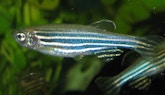
<div><span>A new microscopy technique, published in </span><span>the</span><span> May issue of </span><i>Nature Methods</i><span>, can show the activity of more than 80 percent of the brain’s neurons at one time.<br /> <br /></span></div>
<p><b><i>News and Opinion articles on SFARI.org are editorially independent of the Simons Foundation.</i></b><b></b></p>
<h2><b>References:</b></h2>
<p><b><a name="1"></a>1: </b>Ahrens M.B. <i>et al. Nat. Methods</i> <b>10</b>, 413-420 (2013) <a href="http://www.ncbi.nlm.nih.gov/pubmed/23524393">PubMed</a></p>
<div><strong>2</strong>: Ahrens M.B. <i>et al. Nature</i> <b>485</b>, 471-477 (2012) <span> <a href="http://www.ncbi.nlm.nih.gov/pubmed/22622571" target="_blank">PubMed</a> </span></div><img src="http://feeds.feedburner.com/~r/SimonsFoundation/~4/CEgr3WUzTLI" height="1" width="1"/>]]></content:encoded>
    <dc:publisher>No publisher</dc:publisher>
    <dc:creator>Jessica Wright</dc:creator>
    <dc:rights />
    
      <dc:subject>brain imaging</dc:subject>
    
    
      <dc:subject>technology</dc:subject>
    
    
      <dc:subject>zebrafish</dc:subject>
    
    <dc:date>2013-05-22T13:30:00Z</dc:date>
    <dc:type>News</dc:type>
  </item>


  <item rdf:about="http://sfari.org/news-and-opinion/blog/2013/dsm-5-redefines-autism">
    <title>DSM-5 redefines autism</title>
    <link>http://sfari.org/news-and-opinion/blog/2013/dsm-5-redefines-autism</link>
    <description>On Saturday, the American Psychiatric Association released the DSM-5, the long-awaited new version of its Diagnostic and Statistical Manual of Mental Disorders.</description>
    <content:encoded xmlns:content="http://purl.org/rss/1.0/modules/content/"><![CDATA[<p><dl class="image-left captioned">
                                    <dt>
                                        <img src="http://sfari.org/images/ongoing-images/ongoingdsm5" />
                                    </dt>
                                    <dd class="image-caption"><p><h3><a href="http://sfari.org/search?Subject:list=DSM-5">IN-DEPTH COVERAGE</a></h3>Read <a href="http://sfari.org/search?Subject:list=DSM-5">all of SFARI.org's articles</a> on the fifth version of the <i>Diagnostic and Statistical Manual of Mental Disorders</i> (DSM), which lays out guidelines for diagnosing psychiatric disorders. <a href="http://sfari.org/search?Subject:list=DSM-5">Read more »</a></p></dd>
                                    </dl></p>
<p>On Saturday, the American Psychiatric Association (APA) released the <a href="http://www.psychiatry.org/practice/dsm/dsm5">DSM-5</a>, the long-awaited new version of its <i>Diagnostic and Statistical Manual of Mental Disorders</i>.</p>
<p>Known — and not always in a positive light — as psychiatry’s ‘bible,’ the DSM outlines the criteria for diagnosing various mental disorders in the U.S. For most of these, including autism, diagnosis relies entirely on behavioral symptoms. As a result, changes to the diagnostic criteria sometimes completely redefine our very understanding of a disorder.  </p>
<p>In the case of autism, the DSM-5 includes several changes from its previous iteration, the DSM-IV. The new edition combines four independent diagnoses — autistic disorder, <a href="http://sfari.org/resources/sfari-wiki/asperger-syndrome">Asperger syndrome</a>, pervasive developmental disorder-not otherwise specified (PDD-NOS) and <a href="http://sfari.org/news-and-opinion/viewpoint/2012/in-defense-of-childhood-disintegrative-disorder">childhood disintegrative disorder</a> — into a single label of autism spectrum disorder.</p>
<p>The rationale for this change is that these disorders have the same essential symptoms, but at varying degrees of severity. According to the APA, they are best thought of as a single disorder on a wide spectrum.</p>
<p>The loss of Asperger syndrome has been <a href="http://sfari.org/news-and-opinion/news/2012/analysis-of-new-diagnostic-criteria-for-autism-sparks-debate">particularly controversial</a>, but from a scientific standpoint, members of the DSM-5 working group have argued that there are <a href="http://sfari.org/news-and-opinion/viewpoint/2011/why-fold-asperger-syndrome-into-autism-spectrum-disorder-in-the-dsm-5">no consistent biological features</a> that distinguish Asperger syndrome from autism.</p>
<p>The DSM-5 also combines social and language deficits into a single measure, collapsing the three domains defined in the DSM-IV into two. To be diagnosed with autism spectrum disorder, an individual must have ‘deficits in social communication and social interaction’ and show <a href="http://sfari.org/resources/sfari-wiki/repetitive-behavior">restrictive and repetitive behaviors</a>.</p>
<p><img src="http://sfari.org/images/ongoing-images/ongoingdsm5-v2" class="image-right" /></p>
<p>People who have social deficits but no repetitive behaviors, who up until now have often been diagnosed with PDD-NOS, will receive a new diagnosis of social communication disorder, according to the APA.</p>
<p>Some experts and advocacy groups have <a href="https://sfari.org/news-and-opinion/blog/2012/sobering-sample">expressed concerns</a> that some people would lose their diagnosis under the new criteria and with it, their access to services. Most studies so far have <a href="http://sfari.org/news-and-opinion/news/2012/proposed-guidelines-wont-miss-autism-cases-study-says">suggested otherwise</a>, however. What’s more, the DSM-5 specifies that any individual with a "well-established" DSM-IV diagnosis of autistic disorder, Asperger syndrome or PDD-NOS will receive a diagnosis of autism spectrum disorder.</p>
<p>The APA has reacted to much of the criticism by emphasizing that the understanding of mental disorders, and the DSM itself as a result, is constantly evolving. They have added a <a href="http://psychnews.psychiatryonline.org/newsarticle.aspx?articleid=1688802">new section</a> to introduce disorders — including the bizarre <a href="http://www.psychiatry.org/practice/dsm/dsm5/dsm-5-video-series-why-caffeine-use-disorder-is-included-in-section-iii">caffeine use disorder</a> — that they say warrant further research and consideration.</p>
<p>For months, studies have been debating what impact the DSM-5 will have on autism diagnoses, and whether the manual will be revised to address the many vocal criticisms. As copies of the book make their way into the mail, we are finally leaving the realm of speculation.</p>
<p><b><i>News and Opinion articles on SFARI.org are editorially independent of the Simons Foundation.</i></b></p><img src="http://feeds.feedburner.com/~r/SimonsFoundation/~4/Xr1djJ-RUjg" height="1" width="1"/>]]></content:encoded>
    <dc:publisher>No publisher</dc:publisher>
    <dc:creator>Jessica Wright</dc:creator>
    <dc:rights />
    
      <dc:subject>repetitive behavior</dc:subject>
    
    
      <dc:subject>language</dc:subject>
    
    
      <dc:subject>DSM-5</dc:subject>
    
    
      <dc:subject>social deficits</dc:subject>
    
    
      <dc:subject>DSM-IV</dc:subject>
    
    
      <dc:subject>Asperger syndrome</dc:subject>
    
    
      <dc:subject>PDD-NOS</dc:subject>
    
    
      <dc:subject>diagnosis</dc:subject>
    
    <dc:date>2013-05-21T18:11:07Z</dc:date>
    <dc:type>Blog Post</dc:type>
  </item>


  <item rdf:about="http://sfari.org/news-and-opinion/in-brief/2013/molecular-mechanisms-mice-link-brain-region-to-autism">
    <title>Molecular mechanisms: Mice link brain region to autism</title>
    <link>http://sfari.org/news-and-opinion/in-brief/2013/molecular-mechanisms-mice-link-brain-region-to-autism</link>
    <description>A strain of mice with autism-like behaviors is missing a corpus callosum, a bundle of nerve fibers that connects the two hemispheres of the brain. Two studies published this month investigate the link between these two features.</description>
    <content:encoded xmlns:content="http://purl.org/rss/1.0/modules/content/"><![CDATA[<p><dl style="width:347px;" class="image-left captioned">
                                    <dt style="width:347px;">
                                        <img width="347" height="226" src="http://sfari.org/images/images-2013-folder/images-in-brief-2013/20130521inbriefbtbr" />
                                    </dt>
                                    <dd class="image-caption"><p><b>Lost links</b>: BTBR mice, which have autism-like behaviors, may have a unique stretch of nerve fibers that connect the back portions of the brain.</p></dd>
                                    </dl></p>
<p>A strain of mice with autism-like behaviors is missing a corpus callosum, a bundle of nerve fibers that connects the two hemispheres of the brain. Two studies published this month investigate the link between these two features.</p>
<p>About 1 in 4,000 people are born with a malformed or absent corpus callosum, a condition called agenesis of the corpus callosum (AgCC). Brains of people with AgCC have difficulty with communication across distant regions, a deficit that researchers posit may also underlie autism. About <a href="http://sfari.org/news-and-opinion/news/2013/lack-of-corpus-callosum-yields-insights-into-autism">one third of individuals with AgCC</a> meet the diagnostic criteria for autism.</p>
<p>BTBR mice lack a corpus callosum and have behaviors that show a <a href="http://sfari.org/news-and-opinion/conference-news/2010/society-for-neuroscience-2010/asocial-btbr-strain-is-autistic-mouse-researcher-claims">striking resemblance to those seen in autism</a>. These behaviors include a lack of interest in other mice, unusual vocalizations and obsessive and <a href="http://sfari.org/resources/sfari-wiki/repetitive-behavior">repetitive behaviors</a>, such as intense self-grooming.</p>
<p>Disrupting the corpus callosum in control mice is not sufficient to lead to these autism-like behaviors, however. A study published 6 April in <i>Brain Research</i> suggests that abnormal wiring, rather than absent wiring, may be responsible for the BTBR mice’s behavior<a class="anchor-link" href="#refs"><sup>1</sup></a>.</p>
<p>Instead of in the front of the brain, where the corpus callosum would be, BTBR mice have a stretch of tissue connecting the two hemispheres at the back of the brain. Measurements of the electrical activity of neurons show signals traveling across the back of BTBR mouse brains, suggesting that long-range signals may be crossing this bridge of tissue.</p>
<p>In the second new study, published 15 April in <i>PLoS</i><i> One</i>, researchers sought to pin down the genetic variation that may be responsible for the autism-like symptoms and abnormal brain structure in BTBR mice<a class="anchor-link" href="#refs"><sup>2</sup></a>. They mated BTBR mice with a typical mouse strain, and then mated these crosses with each other, generating more than 400 offspring.</p>
<p>The researchers then looked for genetic variants in the BTBR mice that are inherited along with their autism-like traits. Six regions of the genome appear to be associated with these traits and one region on chromosome 4 is linked to an abnormal corpus callosum.</p>
<p>The researchers then sequenced these linked regions to home in on the specific genes involved. They found variants that are predicted to alter the corresponding protein in 29 genes. One of these, <a href="https://gene.sfari.org/GeneDetail/XIRP1#HG">XIRP1</a>, has previously been linked to autism.</p>
<p>The results are a starting point for understanding the genetics of BTBR mice and linking these genes to autism, the researchers say.</p>
<p><b><i>News and Opinion articles on SFARI.org are editorially independent of the Simons Foundation.</i></b></p>
<h2><b>References:</b></h2>
<p><a name="refs"></a>1: Miller V.M. <i>et al. Brain Res. </i><b>1513</b>, 26-33 (2013) <a href="http://www.ncbi.nlm.nih.gov/pubmed/23570707">PubMed</a></p>
<p>2: Jones-Davis D.M. <i>et al. PLoS One </i><b>8</b>, e61829 (2013) <a href="http://www.ncbi.nlm.nih.gov/pubmed/23613947">PubMed</a></p><img src="http://feeds.feedburner.com/~r/SimonsFoundation/~4/gneJO6XeF0A" height="1" width="1"/>]]></content:encoded>
    <dc:publisher>No publisher</dc:publisher>
    <dc:creator>Jessica Wright</dc:creator>
    <dc:rights />
    
      <dc:subject>repetitive behavior</dc:subject>
    
    
      <dc:subject>language</dc:subject>
    
    
      <dc:subject>mouse models</dc:subject>
    
    
      <dc:subject>connectivity theory</dc:subject>
    
    
      <dc:subject>corpus callosum</dc:subject>
    
    
      <dc:subject>BTBR mice</dc:subject>
    
    
      <dc:subject>social deficits</dc:subject>
    
    <dc:date>2013-05-21T13:30:00Z</dc:date>
    <dc:type>News</dc:type>
  </item>


  <item rdf:about="http://sfari.org/news-and-opinion/viewpoint/2013/small-pieces-of-rna-may-pave-path-to-autism">
    <title>Small pieces of RNA may pave path to autism</title>
    <link>http://sfari.org/news-and-opinion/viewpoint/2013/small-pieces-of-rna-may-pave-path-to-autism</link>
    <description>The discovery of microRNAs that regulate gene expression has changed our view of cellular biochemistry. It may also change our perception of neuropsychiatric disorders such as autism, says Peng Jin.</description>
    <content:encoded xmlns:content="http://purl.org/rss/1.0/modules/content/"><![CDATA[<p><dl style="width:260px;" class="image-left captioned">
                                    <dt style="width:260px;">
                                        <img width="260" height="524" src="http://sfari.org/images/images-2013-folder/images-viewpoint-2013/20130521viewpointjinb" />
                                    </dt>
                                    <dd class="image-caption"><p><strong>Small scale</strong>: Short loops of RNA may regulate the levels of several autism-linked proteins at once.</p></dd>
                                    </dl></p>
<p>In 1993, Victor Ambros and Gary Ruvkun discovered that a small piece of RNA that doesn’t code for protein, LIN-4, is able to repress the translation of LIN-14, a gene important for normal development in a worm model<a class="anchor-link" href="#refs1"><sup>1, 2</sup></a>.</p>
<p>Since then, the total number of small regulatory RNAs thought to be involved in disease has become overwhelming. These include microRNAs (miRNAs)<b> </b>and piwi-interacting RNAs (piRNAs) — which are slightly larger and more complex than miRNAs.<b> </b>There are roughly 900 miRNAs and more than 50,000 piRNAs identified in mammalian cells so far.</p>
<p>Several independent studies have predicted that miRNAs regulate 20 to 30 percent of human genes, but a more sensitive prediction algorithm boosts this estimate considerably to up to 92 percent of genes<a class="anchor-link" href="#refs1"><sup>3, 4</sup></a>. miRNAs regulate the expression of their target genes in certain cell types and during specific developmental periods. They also fine-tune the levels of co-expressed targets to achieve a desired biological response.</p>
<p>The discovery of these small regulatory RNAs in higher-order organisms has changed our view of cellular biochemistry. It may also change our perception of neuropsychiatric disorders such as autism.<b> </b> </p>
<p>Within the past several years, rapidly evolving genomic technologies, combined with the availability of increasingly large study groups, have resulted in a series of highly reproducible findings highlighting the contribution of rare variation to autism.</p>
<p>These studies have led to the discovery of several hundred protein-coding genes that may contribute to autism<a class="anchor-link" href="#refs1"><sup>5</sup></a>. However, the efforts have focused on protein-coding genes alone, which make up about one percent of the human genome.</p>
<p>Given that one miRNA could potentially regulate or fine-tune the expression of multiple proteins, it is possible that the mutations within the miRNA gene could also cause autism. Postmortem brain studies have shown <a href="http://sfari.org/news-and-opinion/news/2008/micrornas-may-play-a-role-in-autism-studies-find">altered levels of some miRNAs</a> in brains from individuals who had autism.</p>
<h2><b>Brain function:</b></h2>
<p>Many of miRNAs’ predicted target genes are expressed in the brain, suggesting that they serve <a href="http://sfari.org/news-and-opinion/toolbox/2012/new-technique-charts-patterns-of-microrna-expression">important roles </a><span>there</span><sup><a class="anchor-link" href="#refs1">6</a></sup>. Approximately 70 percent of known miRNAs are expressed in the nervous system, often at specific sites and times during development. Certain brain-specific miRNAs influence neuronal maturation and plasticity (the ability of neurons to change the strength of their connections), both of which are known to be perturbed in psychiatric disorders.</p>
<p>The broad influence of miRNAs on gene expression networks and their known involvement in neurobiological pathways suggests that perturbation of miRNAs may contribute to the etiology of neuropsychiatric disorders. Indeed, studies have linked altered miRNA expression and function to several psychiatric disorders, including Tourette syndrome and <a href="http://sfari.org/news-and-opinion/conference-news/2008/society-for-neuroscience-2008/micrornas-in-mental-illness">schizophrenia</a><a class="anchor-link" href="#refs1"><sup>7, 8</sup></a>.</p>
<p>What’s more, individuals who have 22q11.2 deletion syndrome, <a href="http://sfari.org/news-and-opinion/conference-news/2011/society-for-neuroscience-2011/schizophrenia-deletion-could-rouse-silent-mutations">which encompasses DGCR8</a>, one of the key genes in miRNA synthesis, are 30 times more likely to have schizophrenia or schizoaffective disorder compared with the general population.</p>
<p>Autism comprises a clinically heterogeneous group of disorders that share common features. An estimated 15 percent of autism cases are the result of a mutation in a single gene. The molecular alterations in these disorders may reveal common pathways shared by others across the autism spectrum.</p>
<p>Interestingly, several autism-associated, single-gene disorders have been linked to altered miRNA expression and function. The first example is <a href="https://sfari.org/resources/sfari-wiki/fragile-x">fragile X syndrome</a>, which is caused by the loss of functional fragile X mental retardation protein (FMRP). This protein is known to repress the production of certain proteins at neuronal junctions, or <a href="https://sfari.org/resources/sfari-wiki/synapse">synapses</a><a class="anchor-link" href="#refs1"><sup>9</sup></a>.</p>
<p>Our own work has demonstrated the biochemical and genetic interaction between FMRP and the miRNA pathway<a class="anchor-link" href="#refs2"><sup>10</sup></a>. Studies using mouse neurons have provided further support for the notion that FMRP and selective miRNAs, such as miR-132 and miR-125, partner to regulate the structure and function of synapses<a class="anchor-link" href="#refs2"><sup>11, 12</sup></a>.</p>
<p>In particular, these studies show that the addition of a chemical phosphate to<b> </b>FMRP modulates its association with miRNAs. This regulates FMRP’s function at synapses that are involved in the mGluR signaling pathway, which is defective in fragile X syndrome and is a <a href="http://sfari.org/news-and-opinion/news/2012/studies-highlight-promise-of-fragile-x-treatment">promising therapeutic target</a><a class="anchor-link" href="#refs2"><sup>11</sup></a>.</p>
<p>The second example is Rett syndrome, which is caused by spontaneous mutations in the <a href="https://gene.sfari.org/GeneDetail/MECP2#HG">MeCP2</a> gene<a class="anchor-link" href="#refs2"><sup>13</sup></a>. MeCP2 may indirectly increase the expression of miR-132 by <a href="http://sfari.org/news-and-opinion/in-brief/2011/molecular-mechanisms-mecp2-regulated-by-chemical-switch">regulating the expression of brain-derived neurotrophic factor</a>, and may directly repress the expression of miR-137 by binding to its regulatory region<a class="anchor-link" href="#refs2"><sup>14, 15, 16</sup></a>.</p>
<p>However, the effect of MeCP2 on miRNAs may be more complex. Additional studies have shown that the loss of MeCP2 may alter the levels of a large number of miRNAs in the mouse brain<a class="anchor-link" href="#refs2"><sup>16</sup></a>. The exact functional relevance of altered miRNA expression on the molecular pathogenesis of Rett syndrome remains to be defined.</p>
<h2><b>Altered expression:</b></h2>
<p>Studies on the potential roles of miRNAs in autism have been limited. Several miRNAs, including miR-132 and miR-212, have shown altered expression in <a href="http://sfari.org/news-and-opinion/viewpoint/2012/the-value-of-blood-cells-in-autism-research">cultured cells</a> and <a href="http://sfari.org/news-and-opinion/conference-news/2011/society-for-neuroscience-2011/researchers-map-micrornas-in-autism-brains">in postmortem brain tissue</a> from a few individuals with autism<a class="anchor-link" href="#refs2"><sup>17, 18, 19</sup></a>.</p>
<p>Interestingly, these same miRNAs are altered in schizophrenia, supporting the idea that common molecular pathways exist between schizophrenia and autism. To further explore the role of miRNAs in autism, systematic small RNA profiling using next-generation sequencing technology and a large collection of postmortem brain tissues is needed. The available miRNA mutant lines would also allow researchers to address the functional roles of these miRNAs in autism and brain development in general.</p>
<p>Despite studies suggesting that autism is significantly heritable, understanding the basis of this heritability has been a challenge. Genome-wide association studies (GWAS) linking genetic variants to the risk of developing autism have so far detected no strong contribution of common alleles<a class="anchor-link" href="#refs1"><sup>5</sup></a>.</p>
<p>However, given the overlap in familial and genetic risk between pairs of the major psychiatric disorders — autism, attention deficit hyperactivity disorder, bipolar disorder, major depressive disorder and schizophrenia — researchers are trying to identify specific variants shared among these disorders.</p>
<p>Intriguingly, the initial analyses found that miR-137, one of the most significant miRNAs implicated in schizophrenia, is also associated with autism<a class="anchor-link" href="#refs2"><sup>20</sup></a>. What’s more, one of miR-137’s mRNA targets, TCF4, is also associated with both autism and schizophrenia. These findings suggest that miR-137-mediated dysregulation is a previously unknown causative mechanism in both disorders.</p>
<p>Given this genetic link and the fact that MeCP2 may also directly regulate the expression of miR-137, it would be interesting to further examine the role of miR-137 in autism, both in animal models and in people.</p>
<p>Ongoing whole-genome sequencing in individuals with autism should help us answer the question of which miRNA gene mutations underlie autism. However, as with protein-coding genes, it will be a significant challenge to validate specific causative mutations within miRNA genes. Given the nature and function of miRNAs, researchers are aiming to develop systems that reflect the activity of certain miRNAs within specific cell types relevant to autism.</p>
<p><i>Peng</i><i> Jin is professor of human genetics at Emory University School of Medicine in Atlanta, Georgia.</i></p>
<p><b><i>News and Opinion articles on SFARI.org are editorially independent of the Simons Foundation.</i></b></p>
<h2><b>References:</b></h2>
<p><a name="refs1"></a>1: Lee R.C. <i>et al. Cell </i><b>75</b>, 843-854 (1993) <a href="http://www.ncbi.nlm.nih.gov/pubmed/8252621">PubMed</a></p>
<p>2: Wightman B. <i>et al. Cell</i> <b>75</b>, 855-862 (1993) <a href="http://www.ncbi.nlm.nih.gov/pubmed/8252622">PubMed</a></p>
<p>3: Lewis B.P. <i>et al.</i> <i>Cell</i> <b>120</b>, 15-20 (2005) <a href="http://www.ncbi.nlm.nih.gov/pubmed/15652477">PubMed</a></p>
<p>4: Xie X.<i> et al.</i> <i>Nature</i> <b>434</b>, 338-345 (2005) <a href="http://www.ncbi.nlm.nih.gov/pubmed/15735639">PubMed</a></p>
<p>5: Buxbaum J.D.<i> et al.</i> <i>Neuron</i> <b>76</b>, 1052-1056 (2012) <a href="http://www.ncbi.nlm.nih.gov/pubmed/23259942">PubMed</a></p>
<p>6: Li X. and P. Jin <i>Nat. Rev. Neurosci.</i> <b>11</b>, 329-338 (2010) <a href="http://www.ncbi.nlm.nih.gov/pubmed/20354535">PubMed</a></p>
<p>7: Abelson J.F.<i> et al.</i> <i>Science</i> <b>310</b>, 317-320 (2005) <a href="http://www.ncbi.nlm.nih.gov/pubmed/16224024">PubMed</a></p>
<p>8: Mellios N. and M. Sur <i>Front. Psychiatry</i> <b>3</b>, 39 (2012) <a href="http://www.ncbi.nlm.nih.gov/pubmed/22539927">PubMed</a></p>
<p>9: Bassell G.J. and S.T. Warren <i>Neuron</i> <b>60</b>, 201-214 (2008) <a href="http://www.ncbi.nlm.nih.gov/pubmed/18957214">PubMed</a></p>
<p>10: Jin P.<i> et al.</i> <i>Nat. Neurosci.</i> <b>7</b>, 113-117 (2004) <a href="http://www.ncbi.nlm.nih.gov/pubmed/14703574">PubMed</a></p>
<p><a name="refs2"></a>11: Muddashetty R.S.<i> et al.</i> <i>Mol. Cell</i> <b>42</b>, 673-688 (2011) <a href="http://www.ncbi.nlm.nih.gov/pubmed/21658607">PubMed</a></p>
<p>12: Edbauer D.<i> et al.</i> <i>Neuron</i> <b>65</b>, 373-384 (2010) <a href="http://www.ncbi.nlm.nih.gov/pubmed/20159450">PubMed</a></p>
<p>13: Chahrour M. and H.Y. Zoghbi <i>Neuron</i> <b>56</b>, 422-437 (2007) <a href="http://www.ncbi.nlm.nih.gov/pubmed/17988628">PubMed</a></p>
<p>14: Klein M.E.<i> et al.</i> <i>Nat. Neurosci.</i> <b>10</b>, 1513-1514 (2007) <a href="http://www.ncbi.nlm.nih.gov/pubmed/17994015">PubMed</a></p>
<p>15: Szulwach K.E.<i> et al.</i> <i>J. Cell Biol.</i> <b>189</b>, 127-141 (2010) <a href="http://www.ncbi.nlm.nih.gov/pubmed/20368621">PubMed</a></p>
<p>16: Wu H.<i> et al.</i> <i>Proc. Natl. Acad. Sci. USA</i> <b>107</b>, 18161-18166 (2010) <a href="http://www.ncbi.nlm.nih.gov/pubmed/20921386">PubMed</a></p>
<p>17: Abu-Elneel K.<i> et al.</i> <i>Neurogenetics</i> <b>9</b>, 153-161 (2008) <a href="http://www.ncbi.nlm.nih.gov/pubmed/18563458">PubMed</a></p>
<p>18: Talebizadeh Z. <i>et al. Autism Res. </i><b>1</b>, 240-250 (2008) <a href="http://www.ncbi.nlm.nih.gov/pubmed/19360674">PubMed</a></p>
<p>19: Sarachana T. <i>et al.</i> <i>Genome Med.</i> <b>2</b>, 23 (2010) <a href="http://www.ncbi.nlm.nih.gov/pubmed/20374639">PubMed</a></p>
<p>20: Cross-Disorder Group of the Psychiatric Genomics Consortium<i> et al.</i> <i>Lancet</i> <b>381</b>, 1371-1379 (2013) <a href="http://www.ncbi.nlm.nih.gov/pubmed/23453885">PubMed</a></p><img src="http://feeds.feedburner.com/~r/SimonsFoundation/~4/8C7a-_CaSBA" height="1" width="1"/>]]></content:encoded>
    <dc:publisher>No publisher</dc:publisher>
    <dc:creator>Peng Jin</dc:creator>
    <dc:rights />
    
      <dc:subject>GWAS</dc:subject>
    
    
      <dc:subject>fragile X syndrome</dc:subject>
    
    
      <dc:subject>22q11</dc:subject>
    
    
      <dc:subject>postmortem brains</dc:subject>
    
    
      <dc:subject>MeCP2</dc:subject>
    
    
      <dc:subject>synaptic plasticity</dc:subject>
    
    
      <dc:subject>microRNAs</dc:subject>
    
    
      <dc:subject>schizophrenia</dc:subject>
    
    
      <dc:subject>FMRP</dc:subject>
    
    
      <dc:subject>gene expression</dc:subject>
    
    
      <dc:subject>Rett syndrome</dc:subject>
    
    <dc:date>2013-05-21T13:30:00Z</dc:date>
    <dc:type>News</dc:type>
  </item>


  <item rdf:about="http://sfari.org/news-and-opinion/investigator-profiles/2013/simon-fisher-hunting-on-the-foxp2-trail">
    <title>Simon Fisher: Hunting on the FOXP2 trail</title>
    <link>http://sfari.org/news-and-opinion/investigator-profiles/2013/simon-fisher-hunting-on-the-foxp2-trail</link>
    <description>Simon Fisher made headlines in 2001 for finding the first gene related to language. He has been following FOXP2 ever since, and has found that it is important in autism and other psychiatric disorders.</description>
    <content:encoded xmlns:content="http://purl.org/rss/1.0/modules/content/"><![CDATA[<p><dl style="width:339px;" class="image-left captioned">
                                    <dt style="width:339px;">
                                        <img width="339" height="240" src="http://sfari.org/images/images-2013-folder/images-profiles-2013/20130520profilefisherb" />
                                    </dt>
                                    <dd class="image-caption"><p style="text-align: right;"><em>P. Strating</em></p>
<p><b>Strokes of luck: </b>Simon Fisher, an expert on the genetics of language, attributes his success to good collaborations and a bit of serendipity.</p></dd>
                                    </dl></p>
<p>As a graduate student in genetics in the mid-1990s, <a class="internal-link" href="resolveuid/6aa41510-acc4-4819-b563-548678d19657">Simon Fisher</a> spent his working hours painstakingly trying to decode the DNA sequence of a piece of the X chromosome. Outside of the lab, though, he was fascinated by a far less tractable question: How does the human brain learn language?</p>
<p>Fisher still remembers poring over <i>The Language Instinct</i>, the 1994 bestseller by linguist Steven Pinker. One chapter describes the ‘K family’ of London, three generations of relatives made famous in 1990 for their problems in forming plural words and recognizing tenses. The large number of relatives with these specific grammatical difficulties, according to Pinker, suggested the existence of “grammar genes.”</p>
<p>Fisher, a young gene hunter, was captivated by the story. “I remember saying to my girlfriend at the time, who’s now my wife, ‘God, it’d be amazing to get your hands on this kind of family,’” Fisher recalls.</p>
<p>Two years later, Fisher took a postdoctoral position in the Oxford University lab of <a class="internal-link" href="resolveuid/3633ccc5-4c8b-4141-bc3f-ec8cf644e376">Anthony Monaco</a>, who was screening DNA from families that included one or two members with autism. Fisher's job was to start screening the DNA in similar families, except with a history of dyslexia or specific language impairment (SLI). The latter is a disorder characterized by language problems without any other physical or cognitive disability.</p>
<p>Just a few weeks after Fisher arrived, Monaco asked him offhandedly if he was interested in analyzing DNA samples from a large London family with SLI. Fisher looked at the pedigree, labeled ‘KE family,’ and recognized it immediately. “I said, ‘I’ll do it, I’ll do it,’” Fisher recalls, laughing. “It was almost like I was primed to do this. It completely fell in my lap.”</p>
<p>In 2001, Fisher and his team reported in <i>Nature</i> the gene responsible for the famous family’s language quirks: <a href="https://gene.sfari.org/GeneDetail/FOXP2#HG">FOXP2</a>, a ‘master switch’ that controls the expression of other genes<a class="anchor-link" href="#refs"><sup>1</sup></a>, including some linked to autism. He’s been digging into FOXP2’s biology ever since.</p>
<h2><b>Gene mapper:</b></h2>
<p>It turns out that the KE family’s language problems aren’t fundamentally based on grammar, as Pinker suggested, but rather are due to trouble coordinating movements of the throat and tongue. Fisher’s studies have found that mice lacking FOXP2 have similar <a href="http://sfari.org/news-and-opinion/news/2012/scientists-link-new-deficits-to-foxp2-mutations-in-mice">defects in motor learning</a>. He has also shown in cultured neurons that FOXP2 regulates hundreds of genes, many of which are involved in <a href="http://sfari.org/news-and-opinion/in-brief/2011/genetics-foxp2-important-for-early-brain-development">brain development</a>, <a href="http://sfari.org/news-and-opinion/news/2011/language-gene-regulates-autism-candidate">autism</a> and other <a href="http://sfari.org/news-and-opinion/in-brief/2012/genetics-language-gene-may-regulate-autism-schizophrenia">psychiatric disorders</a>.</p>
<p>In 2010, Fisher, then 40, founded <a href="http://www.mpi.nl/departments/language-and-genetics">Language and Genetics</a> — the <a href="http://sfari.org/news-and-opinion/blog/2010/speaking-of-genes">only such department</a> in the world — at the Max Planck Institute for Psycholinguistics in Nijmegen, the Netherlands. Though he is a geneticist, his new position requires that he straddle a broad range of subjects, from genetic associations and mouse engineering to linguistic theories and comparative evolution. And that mix suits him quite well.</p>
<p>As early as high school, Fisher wanted to merge his interests in science and language. But his teachers advised him to specialize. He studied natural sciences at Cambridge University in the U.K. and in 1991 moved to Oxford for graduate school.</p>
<p>He worked in <a href="http://www.iop.kcl.ac.uk/staff/profile/default.aspx?go=11342">Ian Craig</a>'s lab, which was part of the <a href="http://www.ornl.gov/sci/techresources/Human_Genome/home.shtml">Human Genome Project</a>, an international effort in which dozens of labs across the world together sequenced the genome. Craig's lab was focused on finding disease genes in particular sections of the X chromosome.</p>
<p>"I was a gene mapper. All I ever really wanted to do was find a gene," Fisher says. And soon he did, pinpointing a gene on the X chromosome that causes a rare kidney stone disease<a class="anchor-link" href="#refs"><sup>2</sup></a>.</p>
<p>When Fisher began his project on the KE family in 1996, quick-and-dirty <a href="http://sfari.org/resources/sfari-wiki/dna-sequencing">genome sequencing</a> did not yet exist. He used another strategy, known as linkage scanning, which compares gene markers in affected and unaffected members of the same family to identify the approximate genomic neighborhood of the culprit gene.</p>
<p>In DNA from affected members of the KE family, he found a strong linkage signal in chromosome 7. "It was the most convincing piece of data that I've seen," Fisher says. The trouble was, the signal encompassed a large region — around 100 genes, any one of which could have been the culprit.</p>
<p>Figuring out which one of those genes was responsible might have taken many years if not for a serendipitous phone call from <a href="http://www.gosh.nhs.uk/medical-conditions/clinical-specialties/clinical-genetics-information-for-parents-and-visitors/meet-the-team/">Jane Hurst</a>, a clinical geneticist who first described the KE family<a class="anchor-link" href="#refs"><sup>3</sup></a>. Soon after Fisher reported on the chromosome 7 linkage, Hurst called him to tell him about a 5-year-old boy with a speech defect who had come into her clinic. "She said, 'He just really reminds me of the KE kids,'" Fisher recalls.</p>
<p>The boy carries a genetic glitch that effectively broke his chromosome 7 into two parts. Working with Cecilia Lai, a graduate student, Fisher discovered that the boy's breakpoint was smack in the middle of FOXP2.</p>
<p>The popular press trumpeted the newly discovered FOXP2 as the first “gene for language,” which Fisher says irked him. “It’s not this magical, mythical thing,” he says. “But it’s still a really exciting piece of biology.”</p>
<p>Researchers worldwide jumped on the discovery. For example, evolutionary biologist <a href="http://wwwstaff.eva.mpg.de/%7Epaabo/">Svante Pääbo</a> of the Max Planck Institute for Evolutionary Anthropology in Leipzig, Germany, teamed up with Fisher to show differences in the sequence of FOXP2 in humans and chimpanzees<a class="anchor-link" href="#refs"><sup>4</sup></a>. Language researchers such as <a href="https://www.ibp.ucla.edu/research/white/">Stephanie White</a> at the University of California, Los Angeles took note, too. White, who uses songbirds to study how <a href="http://sfari.org/news-and-opinion/conference-news/2011/society-for-neuroscience-2011/autism-linked-protein-plays-role-in-zebra-finch-song">social interactions affect vocal learning</a>, has since found that when an adult bird sings, FOXP2 protein levels cycle up and down in its brain.</p>
<h2><b>Autism networks:</b></h2>
<p>FOXP2’s discovery proved to be especially important for autism research — though no one would have guessed it a decade ago. In 2002, the same year Fisher launched his lab at Oxford, he and Monaco reported that they had not found any link between FOXP2 variants and autism in 169 families with the disorder<a class="anchor-link" href="#refs"><sup>5</sup></a>. Fisher then moved on to other projects.</p>
<p>One of his very first screens turned up <a href="https://gene.sfari.org/humangene/detail/CNTNAP2">CNTNAP2</a>. The gene is located in a chromosomal region that <a href="http://sfari.org/news-and-opinion/investigator-profiles/2009/daniel-geschwind-after-many-detours-on-the-trail-of-autisms-genetics">Daniel Geschwind</a> and others <a href="http://sfari.org/news-and-opinion/blog/2008/genes-that-fit">linked to autism</a> and language delay. Later, Fisher collaborated with Geschwind and found that FOXP2 <a href="http://sfari.org/news-and-opinion/news/2008/autism-gene-linked-to-language-deficits">dials down the expression of CNTNAP2</a>, and that some individuals with SLI carry CNTNAP2 variants<a class="anchor-link" href="#refs"><sup>6</sup></a>.</p>
<p>FOXP2 turns out to have several other interesting targets, including the <a href="http://sfari.org/news-and-opinion/news/2011/language-gene-regulates-autism-candidate">autism risk gene MET</a> and the <a href="http://sfari.org/news-and-opinion/in-brief/2012/genetics-language-gene-may-regulate-autism-schizophrenia">schizophrenia-linked DISC1</a>. Other proteins in the FOXP2 family are also cropping up in autism studies. In 2011, for example, Fisher and <a href="http://sfari.org/news-and-opinion/investigator-profiles/2010/evan-eichler-following-his-instincts-to-autism-hotspots">Evan Eichler</a> described a child who carries two mutations: <a href="http://sfari.org/news-and-opinion/news/2011/family-sequencing-study-boosts-two-hit-model-of-autism">one in CNTNAP2 and another in FOXP1</a><a class="anchor-link" href="#refs"><sup>7</sup></a>.</p>
<p>As these diverse studies attest, Fisher is far more interested in unpacking complex biological mysteries than in advancing any particular technique. "He's question- and curiosity-driven," says <a href="http://www.mpi.nl/people/vernes-sonja">Sonja Vernes</a>, who was once Fisher's graduate student and now leads a group within his new department. "He's quite good at choosing the right people to collaborate with to try to answer those questions."</p>
<p>Fisher enjoys working with others, and his colleagues seem to like working with him just as much. When Fisher was in graduate school, for example, his advisor Craig would often throw get-togethers for the lab at his house. Fisher is “a good fellow at a party,” Craig says, and an impressive pianist.</p>
<p>On one occasion, after Craig and his wife had gone upstairs to bed, Craig went back downstairs to make sure the door was locked. "I came down and there was Simon and two or three other people still around the piano," he recalls. "We used to have pretty good times."</p>
<p>Today, just as he was then, Fisher is focused on trying to bridge the gap between genes and behavior. For example, last year he and others launched the interdisciplinary Nijmegen Cognomics Initiative to pursue tricky biological questions by recruiting thousands of people for sequencing, cognitive tests and brain imaging.</p>
<p>After more than a decade studying people with language problems, Fisher's also interested in turning to the other end of the spectrum: people who master multiple languages with ease, and who can effortlessly translate from one language to another. "The biological underpinnings of these exceptional abilities are virtually unknown at this point, so this should be quite a fun new area to get into," he says.</p>
<p>Despite his many successes, Fisher calls himself a “wannabe neuroscientist,” attributing his accomplishments to good collaborations and a healthy dose of luck.</p>
<p>"I think that you probably have to be lucky to be successful in science," Fisher says. "But one of the secrets is knowing when and how to seize on those moments of serendipity."</p>
<p><b><i>News and Opinion articles on SFARI.org are editorially independent of the Simons Foundation.</i></b></p>
<h2><b>References:</b></h2>
<p><a name="refs"></a>1. Lai C.S. <i>et al. Nature</i> <b>413</b>, 519-523 (2001) <a href="http://www.ncbi.nlm.nih.gov/pubmed/11586359">PubMed</a></p>
<p>2. Lloyd S.E. <i>et al. Nature</i> <b>379</b>, 445-449 (1996) <a href="http://www.ncbi.nlm.nih.gov/pubmed/8559248">PubMed</a></p>
<p>3. Hurst J.A. <i>et al. Dev. Med. Child Neurol</i>. <b>32</b>, 352-355 (1990) <a href="http://www.ncbi.nlm.nih.gov/pubmed/2332125">PubMed</a></p>
<p>4. Enard W. et al. Nature <b>418</b>, 869-872 (2002) <a href="http://www.ncbi.nlm.nih.gov/pubmed/12192408">PubMed</a></p>
<p>5. Newbury D.F. <i>et al. Am. J. Hum. Genet.</i> <b>70</b>, 1318–1327 (2002) <a href="http://www.ncbi.nlm.nih.gov/pubmed/11894222">PubMed</a></p>
<p>6. Vernes S.C. <i>et al. N. Engl. J. Med.</i> <b>359</b>, 2337-2345 (2008) <a href="http://www.ncbi.nlm.nih.gov/pubmed/18987363">PubMed</a></p>
<p>7. O'Roak B.J. <i>et al. Nat. Genet.</i> <b>43</b>, 585-589 (2011) <a href="http://www.ncbi.nlm.nih.gov/pubmed/21572417">PubMed</a></p><img src="http://feeds.feedburner.com/~r/SimonsFoundation/~4/lrqGLSX9Khw" height="1" width="1"/>]]></content:encoded>
    <dc:publisher>No publisher</dc:publisher>
    <dc:creator>Virginia Hughes</dc:creator>
    <dc:rights />
    
      <dc:subject>FOXP2</dc:subject>
    
    
      <dc:subject>specific language impairment</dc:subject>
    
    
      <dc:subject>language</dc:subject>
    
    
      <dc:subject>mouse models</dc:subject>
    
    
      <dc:subject>whole-exome sequencing</dc:subject>
    
    
      <dc:subject>common variants</dc:subject>
    
    
      <dc:subject>connectivity</dc:subject>
    
    
      <dc:subject>CNTNAP2</dc:subject>
    
    
      <dc:subject>sequencing</dc:subject>
    
    
      <dc:subject>rare variants</dc:subject>
    
    <dc:date>2013-05-20T13:20:00Z</dc:date>
    <dc:type>News</dc:type>
  </item>


  <item rdf:about="http://sfari.org/news-and-opinion/blog/2013/power-failure">
    <title>Power failure</title>
    <link>http://sfari.org/news-and-opinion/blog/2013/power-failure</link>
    <description>The odds that the average new neuroscience study's findings are actually true are about 50-50, according to a report in the May Nature Reviews Neuroscience.</description>
    <content:encoded xmlns:content="http://purl.org/rss/1.0/modules/content/"><![CDATA[<p><dl style="width:352px;" class="image-left captioned">
                                    <dt style="width:352px;">
                                        <img width="352" height="352" src="http://sfari.org/images/images-2013-folder/images-blog-2013/20130517blogneurostudies" />
                                    </dt>
                                    <dd class="image-caption"></dd>
                                    </dl></p>
<p>Say you're poring over a brain imaging study that's making a hot new claim. If it has the power of an average neuroscience study, the odds that its findings are actually true are <a href="http://www.ncbi.nlm.nih.gov/pubmed/23571845">50-50 or lower</a>, according to a report in the May <i>Nature Reviews Neuroscience</i>.</p>
<p>A study sample, by definition, is a slice of reality. With the proper statistical number crunching, researchers can quantify the likelihood that a pattern seen in a sample occurs in the real world.</p>
<p>Statistical power — the probability that a study will find an effect if one actually exists — depends on two factors: sample size and <a href="http://sfari.org/news-and-opinion/columnists/jon-brock/2013/connections-perfect-match">effect size</a>.</p>
<p>In a brain imaging study that's looking for a telltale autism signature, for example, the sample size is the total number of participants, and the effect size is the difference in brain activity between the autism and control groups.</p>
<p>If a study has a small sample size, it needs to find a moderate-to-large effect in order to <a href="http://sfari.org/news-and-opinion/blog/2010/power-shortage">surpass the power threshold</a> for statistical significance.</p>
<p>What surprised me, however, is that even when a small study finds a statistically significant effect, it's more likely to be false than a finding from a large study.</p>
<p>That's partly because random fluctuations between individual data points carry more weight in a small sample than they would in a large one. This works in both directions: Small studies sometimes underestimate the true size of the effect and sometimes overestimate it.</p>
<p>The trouble is, the overestimates are much more likely to be published in the scientific literature. What's more, replication studies that might catch the error rarely make it to top-tier journals.</p>
<p>The new report calculated the number of low-powered studies in neuroscience. Analyzing data from 48 meta-analyses published in 2011, <a href="http://research-information.bris.ac.uk/explore/en/persons/kate-s-button%28c7189543-dd71-4874-a49c-e0999b9d0811%29.html">Kate Button</a> and her colleagues at the University of Bristol in the U.K. found that in most studies, the power ranges from just 8 percent to 31 percent. At this low power, a positive result is true only about half the time or less.</p>
<p>The researchers also tried to pinpoint the types of studies most vulnerable to small sample size. It turns out that studies measuring brain volume have a statistical power of about eight percent. Research on animals, too, is often severely underpowered for the effects researchers claim to find.</p>
<p>None of the studies in this analysis were focused on autism, Button says. "But I would expect the problems associated with low power would apply to the autism literature — they seem to be fairly ubiquitous across science disciplines."</p>
<p>I see two lessons here for scientists. One is that you should always try to increase sample sizes, perhaps by working collaboratively with other teams, and by thoroughly describing your methods so others can easily reproduce them.</p>
<p>The second lesson pertains not just to scientists, but to students, journalists and the public at large: Be skeptical of everything you read, even — and maybe especially — if the source is a prestigious scientific journal.</p>
<p><b><i>News and Opinion articles on SFARI.org are editorially independent of the Simons Foundation. </i></b></p><img src="http://feeds.feedburner.com/~r/SimonsFoundation/~4/Hz03a6KV5Oc" height="1" width="1"/>]]></content:encoded>
    <dc:publisher>No publisher</dc:publisher>
    <dc:creator>Virginia Hughes</dc:creator>
    <dc:rights />
    
      <dc:subject>brain imaging</dc:subject>
    
    
      <dc:subject>bioinformatics</dc:subject>
    
    <dc:date>2013-05-17T18:00:00Z</dc:date>
    <dc:type>Blog Post</dc:type>
  </item>


  <item rdf:about="http://sfari.org/news-and-opinion/in-brief/2013/cognition-and-behavior-autism-brains-normalize-over-time">
    <title>Cognition and behavior: Autism brains normalize over time</title>
    <link>http://sfari.org/news-and-opinion/in-brief/2013/cognition-and-behavior-autism-brains-normalize-over-time</link>
    <description>Differences in brain activity that distinguish children with autism from controls may lessen with age, according to a meta-analysis published in the March issue of the Journal of the American Academy of Child and Adolescent Psychiatry.</description>
    <content:encoded xmlns:content="http://purl.org/rss/1.0/modules/content/"><![CDATA[<p><dl style="width:245px;" class="image-left captioned">
                                    <dt style="width:245px;">
                                        <img width="245" height="357" src="http://sfari.org/images/images-2013-folder/images-in-brief-2013/20130517inbrieffmri" />
                                    </dt>
                                    <dd class="image-caption"><p><b>Brain blips: </b>Children with autism have too much (red) or too little (blue) activity in certain brain regions. </p></dd>
                                    </dl></p>
<p>Differences in brain activity that distinguish children with autism from controls may lessen with age, according to a meta-analysis published in the March issue of the <i>Journal of the American Academy of Child and Adolescent Psychiatry</i><a class="anchor-link" href="#refs"><sup>1</sup></a>.</p>
<p>The study pulls together functional magnetic resonance imaging (fMRI) results from several studies of both children and adults with autism, building a picture of changes in the disorder over time.</p>
<p>Observed <a href="http://sfari.org/news-and-opinion/news/2008/face-processing-network-weaker-in-autism-scientists-say">differences in brain activity</a> between individuals with autism and controls suggest that certain brain regions are less active in people with autism than in controls, or that these regions need to work harder in order for someone with autism to complete the same task.</p>
<p>Most results are based on small studies, however, usually focused on a single age group. To compare a large number of participants, the researchers pooled data from 18 fMRI studies of children with autism and 24 of adults with the disorder. Together, the studies include data from 535 children (262 with autism and 273 controls) and 604 adults (288 with autism and 316 controls).</p>
<p>The researchers classified the studies as those that investigated social tasks, such as face processing, and those focused on nonsocial tasks, such as reward processing.</p>
<p>During social tasks, children with autism show more activity than controls do in the left postcentral gyrus, which detects the sense of touch. They show less activity than controls do in the right hippocampus and the right superior temporal gyrus, which are involved in memory and language, respectively. These differences lessen when comparing adults who have autism with controls, the study found.</p>
<p>Similarly, during nonsocial tasks, children with autism show more activity in the right insula and the left cingulate gyrus than do controls. These regions play a role in consciousness and emotion processing, respectively. Children with autism show less activity than controls in the right middle frontal gyrus and in the frontal lobe, which regulates reward, attention and short-term memory. These differences are again less significant when comparing adults who have autism with adult controls.</p>
<p>The results are reminiscent of studies of brain size, which have shown that children with autism have <a href="http://sfari.org/resources/sfari-wiki/macrocephaly">large heads</a> that normalize as they reach adulthood.</p>
<p>Long-term studies on the same individuals as they age will help scientists better understand how brain function changes in autism over time, the researchers say.</p>
<p><b><i>News and Opinion articles on SFARI.org are editorially independent of the Simons Foundation.</i></b></p>
<h2><b>References:</b></h2>
<p><a name="refs"></a>1: Dickstein D.P. <i>et al. J. Am. Acad. Child Adolesc. Psychiatry</i> <b>52</b>, 279-289 (2013) <a href="http://www.ncbi.nlm.nih.gov/pubmed/23452684">PubMed</a></p><img src="http://feeds.feedburner.com/~r/SimonsFoundation/~4/N77_cOXk9QE" height="1" width="1"/>]]></content:encoded>
    <dc:publisher>No publisher</dc:publisher>
    <dc:creator>Jessica Wright</dc:creator>
    <dc:rights />
    
      <dc:subject>fMRI</dc:subject>
    
    
      <dc:subject>macrocephaly</dc:subject>
    
    
      <dc:subject>brain imaging</dc:subject>
    
    
      <dc:subject>language</dc:subject>
    
    
      <dc:subject>attention</dc:subject>
    
    
      <dc:subject>memory</dc:subject>
    
    
      <dc:subject>face processing</dc:subject>
    
    <dc:date>2013-05-17T13:30:00Z</dc:date>
    <dc:type>News</dc:type>
  </item>


  <item rdf:about="http://sfari.org/news-and-opinion/news/2013/twin-study-finds-epigenetic-imprint-of-autism-traits">
    <title>Twin study finds epigenetic imprint of autism traits</title>
    <link>http://sfari.org/news-and-opinion/news/2013/twin-study-finds-epigenetic-imprint-of-autism-traits</link>
    <description>Epigenetics, or the chemical markings on DNA that affect gene expression, plays a role in some cases of autism, according to a study of 50 identical twins published 23 April in Molecular Psychiatry.</description>
    <content:encoded xmlns:content="http://purl.org/rss/1.0/modules/content/"><![CDATA[<p><dl class="image-left captioned">
                                    <dt>
                                        <img src="http://sfari.org/images/images-2013-folder/images-news-2013/20130516newstwins" />
                                    </dt>
                                    <dd class="image-caption"><p><b>Twin peaks: </b>Identical twins who are discordant for autism show intriguing differences in DNA methylation, a type of epigenetic mark.</p></dd>
                                    </dl></p>
<p>Epigenetics, or the chemical markings on DNA that affect its expression, plays a role in some cases of autism, according to a new study of 50 identical twins published 23 April in <i>Molecular Psychiatry</i><a class="anchor-link" href="#refs"><sup>1</sup></a>.</p>
<p>Autism has strong genetic roots: If one <a href="http://sfari.org/news-and-opinion/classic-paper-reviews/2008/1977-paper-on-the-first-autism-twin-study-commentary-by-angelica-ronald-and-robert-plomin">identical twin has autism</a>, the likelihood that the other also has the disorder is about 70 percent<a class="anchor-link" href="#refs"><sup>2</sup></a>. But the other 30 percent of the time, the <a href="http://sfari.org/news-and-opinion/news/2011/experts-critique-statistics-conclusion-of-autism-twin-study">twins are discordant</a>, meaning that one has autism and the other does not.</p>
<p>The new study finds many differences in DNA methylation between twins discordant for autism. Methylation is a type of epigenetic change in which methyl groups are added to DNA and switch on or off the underlying gene. The researchers also found methylation differences between twins who differ on tests of autism traits.</p>
<p>Epigenetic marks can be influenced by <a href="http://sfari.org/news-and-opinion/news/2011/brain-activity-triggers-widespread-epigenetic-changes">any number of environmental exposures</a>, from everyday behaviors to diet and stress. Studying identical twins, who share the same genetic material, helps researchers zero in on environmental differences, says <a class="internal-link" href="resolveuid/c6829e6c-5814-4939-b8ec-a3aa3ce204da">Robert Plomin</a>, professor of behavioral genetics at King’s College London in the U.K., who co-led the study<b>.</b> “It’s a neat tool for getting at environmental factors that could be causing autism,” Plomin says.</p>
<p>Some of the epigenetic marks crop up in genes that have not been linked to autism before, whereas others implicate known autism candidates, such as <a href="https://gene.sfari.org/GeneDetail/AUTS2">AUTS2</a>, <a href="https://gene.sfari.org/GeneDetail/GABRB3#HG">GABRB3</a>, <a href="https://gene.sfari.org/GeneDetail/NLGN3">NLGN3</a>, <a href="https://gene.sfari.org/GeneDetail/NRXN1">NRXN1</a>, <a href="https://gene.sfari.org/GeneDetail/SLC6A4">SLC6A4</a> and <a href="http://sfari.org/resources/sfari-wiki/ube3a">UBE3A</a>.</p>
<p>“When the same loci show up again and again, it probably means that they’re relevant for disease,” says <a href="http://www.mountsinai.org/profiles/schahram-akbarian">Schahram Akbarian</a>, professor of psychiatry and neuroscience at Mount Sinai School of Medicine in New York, who was not involved in the new study. Akbarian’s team has also implicated AUTS2 in <a href="http://sfari.org/news-and-opinion/news/2011/study-charts-epigenetic-landscape-of-autism-brains">epigenetic screens of postmortem brain tissue</a> from individuals with autism. “Both our study and the new study propose that the epigenetic risk architecture of autism shows significant overlap with the genetic risk architecture of the disorder.”</p>
<h2><b>Mismatched methylation:</b></h2>
<p>Plomin and his collaborators mapped the epigenetic profiles of 50 pairs of identical twins, a subset of a much larger project in the U.K. called the <a href="http://www.teds.ac.uk">Twins Early Development Study</a>.</p>
<p>Participants in the project were all born between 1994 and 1996. When they were 8 years old, they took the Childhood Autism Symptom Test, or CAST, a 31-item questionnaire that measures autism traits such as speech delay and difficulty making conversation. The researchers collected blood samples from the participants at age 15.</p>
<p>Of the 50 twin pairs, 6 are considered discordant for autism. "These are the twins in our study who differed as much as possible in their autistic symptoms," Plomin says.</p>
<p>Each of these six twin pairs shows dramatic differences in DNA methylation, the study found. On average, each pair has 37 genomic regions with significant methylation differences. Most of these are unique to that pair, but a few genes are methylated differently in at least two of the twin pairs.</p>
<p>Like most twin studies, this one is limited by its small numbers, notes <a class="internal-link" href="resolveuid/2bf17bcf-9ce9-4dba-b10c-1bebd5d0c9ee">Janine LaSalle</a>, professor of medical microbiology and immunology at the University of California, Davis, who was not involved in the study. "Some of what they're seeing could be noise that won’t hold up in larger studies," LaSalle says. "But I think it’s encouraging that they’re finding some interesting differences."</p>
<p>The study also found methylation differences between twin pairs discordant for certain autism traits, based on subscales of CAST.</p>
<p>For example, in nine pairs discordant for social traits, one of the differentially methylated genes is <a href="https://gene.sfari.org/GeneDetail/GABRB3#HG">GABRB3</a>, which encodes a <a href="http://sfari.org/news-and-opinion/news/2009/gaba-receptor-variant-found-in-families-with-autism">brain receptor linked to autism</a>. In another eight pairs discordant for communicative behaviors, the researchers fingered UBE3A, mutations in which cause the autism-related <a href="http://sfari.org/resources/sfari-wiki/angelman-syndrome">Angelman syndrome</a>.</p>
<p>This approach is well suited for trying to simplify the notorious variability of the autism spectrum, notes <a href="http://sfari.org/author/?author=https://id.sfari.org/valeriehu">Valerie Hu</a>, professor of biochemistry and molecular biology at George Washington University in Washington, D.C., who was not involved in the work.</p>
<p>"The heterogeneity of autism, both in terms of clinical presentation and in terms of genetics, wipes out a lot of significant findings," she says. "By breaking down the [traits], they seem to have gotten out a lot more genes."</p>
<p>In 2010, Hu's group reported methylation differences in three twin pairs discordant for autism<a class="anchor-link" href="#refs"><sup>3</sup></a>. That analysis pinpointed two genes, <a href="http://sfari.org/news-and-opinion/news/2011/new-candidate-gene-may-explain-male-bias-of-autism">RORA</a> and <a href="https://gene.sfari.org/GeneDetail/BCL2#HG">BCL2</a>, which did not show up in the new study. "That probably also speaks to the heterogeneity," she says.</p>
<p>It would have been interesting to track how the differences affect gene expression, Hu adds. "It’s important in the long run to demonstrate that the methylation differences picked out here have functional relevance, because that’s where it’s at, right?"<b><i></i></b></p>
<p><b><i>News and Opinion articles on SFARI.org are editorially independent of the Simons Foundation.</i></b></p>
<h2><b>References: </b></h2>
<p><a name="refs"></a>1. Wong C.C. <i>et al. Mol. Psychiatry</i> Epub ahead of print (2013) <a href="http://www.ncbi.nlm.nih.gov/pubmed/23608919">PubMed</a></p>
<p>2. Hallmayer J. <i>et al. Arch. Gen. Psychiatry</i> <b>68</b>, 1095-1102 (2011) <a href="http://www.ncbi.nlm.nih.gov/pubmed/21727249">PubMed</a></p>
<p>3. Nguyen A. <i>et al. FASEB J.</i> <b>24</b>, 3036-3051 (2010) <a href="http://www.ncbi.nlm.nih.gov/pmc/articles/PMC2909294/">PubMed</a></p><img src="http://feeds.feedburner.com/~r/SimonsFoundation/~4/9BbGXwPjlMs" height="1" width="1"/>]]></content:encoded>
    <dc:publisher>No publisher</dc:publisher>
    <dc:creator>Virginia Hughes</dc:creator>
    <dc:rights />
    
      <dc:subject>neurexin</dc:subject>
    
    
      <dc:subject>repetitive behavior</dc:subject>
    
    
      <dc:subject>epigenetics</dc:subject>
    
    
      <dc:subject>neuroligin</dc:subject>
    
    
      <dc:subject>UBE3A</dc:subject>
    
    
      <dc:subject>environment</dc:subject>
    
    
      <dc:subject>twins</dc:subject>
    
    
      <dc:subject>social deficits</dc:subject>
    
    
      <dc:subject>gene expression</dc:subject>
    
    <dc:date>2013-05-16T13:25:00Z</dc:date>
    <dc:type>News</dc:type>
  </item>


  <item rdf:about="http://sfari.org/news-and-opinion/toolbox/2013/new-chromosome-labels-highlight-dna-inversions">
    <title>New chromosome labels highlight DNA inversions</title>
    <link>http://sfari.org/news-and-opinion/toolbox/2013/new-chromosome-labels-highlight-dna-inversions</link>
    <description>A new technique can help researchers spot segments of DNA that have flipped their direction by 180 degrees, according to a study published in the April issue of Chromosome Research. </description>
    <content:encoded xmlns:content="http://purl.org/rss/1.0/modules/content/"><![CDATA[<p><dl class="image-left captioned">
                                    <dt>
                                        <img src="http://sfari.org/images/images-2013-folder/images-toolbox-2013/20130515toolboxinversions" />
                                    </dt>
                                    <dd class="image-caption"><p><b>Light spots</b>: Short fluorescent pieces of DNA that bind in only one orientation (pink) spotlight inverted chromosomal segments.</p></dd>
                                    </dl></p>
<p>A new technique can help researchers spot inversions, or segments of DNA that have flipped their direction by 180 degrees, according to a study published in the April issue of <i>Chromosome Research</i><a class="anchor-link" href="#refs"><sup>1</sup></a><i>. </i> </p>
<p>Because DNA inversions are difficult to detect using traditional methods, the role they may play in human disease is mostly unknown, the researchers say. </p>
<p>Other types of chromosomal alterations have been shown to be important in many neurological disorders, including autism. For example, large duplications or deletions of DNA, called <a href="http://sfari.org/resources/sfari-wiki/copy-number-variation">copy number variations</a>, and translocations — sections of DNA swapped between chromosomes — are more common <a href="http://sfari.org/news-and-opinion/news/2012/chromosome-exchanges-reveal-new-autism-related-genes">in children with autism</a> than in controls.</p>
<p>Unlike these events, inversions do not change the size of the chromosome, and are difficult to detect. In one technique, researchers stain chromosomes with dyes so that they appear striped or banded under the microscope. Large inversions, on the order of several megabases, sometimes alter this pattern, but smaller ones never do.</p>
<p>In the new study, the researchers first induced cell division, causing the DNA helix to unwind. Each strand then paired off with a newly synthesized partner strand. The researchers then used a chemical to destroy the newly synthesized DNA, leaving only the two separated original DNA strands.</p>
<p>The researchers synthesized 17,000 oligos, or short pieces of fluorescent DNA, that, over the length of the entire genome, bind to DNA oriented in one direction but not the other. As a result, most of these pieces would be expected to bind only one of the separated strands.</p>
<p>In the case of an inversion, however, the oligos would also bind the inverted sequence on the opposite strand, creating short blips of fluorescence on that strand.</p>
<p>The researchers tested the method by detecting inversions after exposing human cells to radiation. Without that exposure, they found a low rate (less than 0.3 percent) of spontaneous inversions during cell division. The technique can be used to explore whether inversions play a role in autism.</p>
<h2><b>References</b>:</h2>
<p><a name="refs"></a>1: Ray F.A. <i>et al. Chromosome Res.</i> <b>21</b>, 165-174 (2013) <a href="http://www.ncbi.nlm.nih.gov/pubmed/23572395">PubMed</a></p><img src="http://feeds.feedburner.com/~r/SimonsFoundation/~4/BeCCoHgSkL8" height="1" width="1"/>]]></content:encoded>
    <dc:publisher>No publisher</dc:publisher>
    <dc:creator>Jessica Wright</dc:creator>
    <dc:rights />
    
      <dc:subject>copy number variation</dc:subject>
    
    <dc:date>2013-05-15T13:30:00Z</dc:date>
    <dc:type>News</dc:type>
  </item>


  <item rdf:about="http://sfari.org/news-and-opinion/blog/2013/encouraging-speech">
    <title>Encouraging speech</title>
    <link>http://sfari.org/news-and-opinion/blog/2013/encouraging-speech</link>
    <description>Little evidence supports the use of sign language for nonverbal children with autism, but other therapies show promise, says a review published 24 April in Frontiers in Integrative Neuroscience.</description>
    <content:encoded xmlns:content="http://purl.org/rss/1.0/modules/content/"><![CDATA[<p><img src="http://sfari.org/images/images-2013-folder/images-blog-2013/20130514blognonverbal" class="image-left" /></p>
<p>About <a href="http://plosone.org/article/info%3Adoi%2F10.1371%2Fjournal.pone.0025505">25 percent of children</a> with autism are nonverbal. Yet <a href="http://www.frontiersin.org/Integrative_Neuroscience/10.3389/fnint.2013.00030/abstract">there is a lack</a> of rigorous studies measuring the effectiveness of different therapies for these children, says a review published 24 April in <i>Frontiers in Integrative Neuroscience</i>.</p>
<p>Sign language, one of the more common therapies, may work in <a href="http://ncbi.nlm.nih.gov/pubmed/3410812">conjunction with other approaches</a> for children who have some verbal skills, but it does <a href="http://speechandlanguage.com/ebp/pdfs/1-2-aug-2006.pdf">not improve speech</a> in most nonverbal children with autism, according to the review.</p>
<p>What’s more, children who have autism and impaired motor skills often have <a href="http://ncbi.nlm.nih.gov/pubmed/9261668">difficulty signing</a> and struggle with <a href="http://books.google.com/books/about/Autism_Spectrum_Disorders.html?id=0hHbAAAAMAAJ">imitation and symbolic representation</a>.</p>
<p>That message has eluded clinicians: A survey of specialists from 69 school districts in California found that many <a href="http://ncbi.nlm.nih.gov/pmc/articles/PMC1350798/">consider sign language training</a> an effective intervention for autism.</p>
<p>Another commonly used autism therapy, the <a href="http://pecsusa.com/">picture exchange communication system</a> (PECS), <a href="http://ncbi.nlm.nih.gov/pubmed/22938071">seems better able to improve</a> language abilities, imitation and joint attention — following the gaze of another — in nonverbal children with autism. Unlike sign language, PECS does not require fine motor skills.</p>
<p>Researchers compared PECS with Responsive Education and Prelinguistic Milieu Teaching, a therapy with two components: showing parents how to play with their children in ways that encourage language development, and teaching children gestures, joint attention and speech through play.</p>
<p>Compared with this method, PECS is more successful at helping nonverbal children with autism increase their <a href="http://ncbi.nlm.nih.gov/pubmed/16908870">frequency and range of spoken words</a><span> </span>after six months of treatment.</p>
<p>Multiple studies also show encouraging results from the <a href="http://sfari.org/news-and-opinion/news/2010/early-intervention-yields-big-benefits-for-children-with-autism">Early Start Denver Model</a>, a play-based therapy. This approach improves language and behavioral skills, and encompasses reciprocal imitation training, which <a href="http://ncbi.nlm.nih.gov/pubmed/16568355">improves imitation</a>, pretend play, language and joint attention skills, according to a small study.</p>
<p>Three other therapies — <a href="http://promptinstitute.com/">prompts for restructuring oral muscular phonetic targets</a><span>,</span> <a href="http://plosone.org/article/info%3Adoi%2F10.1371%2Fjournal.pone.0025505">auditory-motor mapping treatment</a> and <a href="http://ncbi.nlm.nih.gov/pubmed/21631313">electromagnetic brain stimulation</a> — have each been assessed in a single study of nonverbal children with autism. More research is needed to measure their effectiveness, the researchers say. </p>
<p>Interventions that have targeted children <a href="http://ncbi.nlm.nih.gov/pubmed/11098873">younger than 5 years old</a> yield better speech and language improvements than those aimed at older children, the new study found.</p>
<p>Perhaps the greatest need is to identify behaviors that put children with autism at risk for speech delays. This information could be used to develop more effective therapies, the researchers say.</p>
<p>For example, children often miss important motor milestones, such as banging on toys with their hands and imitating other people's gestures and facial expressions. Research suggests that <a href="http://ncbi.nlm.nih.gov/pubmed/17191097">early motor behavior</a> may be associated with language development.</p>
<p><b><i>News and Opinion articles on SFARI.org are editorially independent of the Simons Foundation.</i></b></p><img src="http://feeds.feedburner.com/~r/SimonsFoundation/~4/IcyaokUnO5I" height="1" width="1"/>]]></content:encoded>
    <dc:publisher>No publisher</dc:publisher>
    <dc:creator>Laura Geggel</dc:creator>
    <dc:rights />
    
      <dc:subject>language</dc:subject>
    
    
      <dc:subject>vocalization</dc:subject>
    
    
      <dc:subject>joint attention</dc:subject>
    
    
      <dc:subject>learning</dc:subject>
    
    
      <dc:subject>behavioral interventions</dc:subject>
    
    
      <dc:subject>developmental delay</dc:subject>
    
    <dc:date>2013-05-14T18:00:00Z</dc:date>
    <dc:type>Blog Post</dc:type>
  </item>


  <item rdf:about="http://sfari.org/news-and-opinion/in-brief/2013/genetics-protein-transport-affects-neuronal-junctions">
    <title>Genetics: Protein transport affects neuronal junctions</title>
    <link>http://sfari.org/news-and-opinion/in-brief/2013/genetics-protein-transport-affects-neuronal-junctions</link>
    <description>Two proteins involved in shuttling other proteins between the outside and inside of a cell show a distinct pattern of expression in autism brains, according to a report published 19 March in Molecular Psychiatry.</description>
    <content:encoded xmlns:content="http://purl.org/rss/1.0/modules/content/"><![CDATA[<p><dl style="width:362px;" class="image-left captioned">
                                    <dt style="width:362px;">
                                        <img width="362" height="360" src="http://sfari.org/images/images-2013-folder/images-in-brief-2013/20130514inbriefendosomes" />
                                    </dt>
                                    <dd class="image-caption"><p style="text-align: right; "><em>Hum. Prot. Atlas</em></p>
<p><strong>Curious link:</strong> Proteins that function in cellular compartments called endosomes may influence the expression of autism-linked genes.</p></dd>
                                    </dl></p>
<p>Two proteins involved in shuttling other proteins between the outside and inside of a cell show a distinct pattern of expression in autism brains, according to a report published 19 March in <i>Molecular Psychiatry</i><a class="anchor-link" href="#refs"><sup>1</sup></a>.</p>
<p>These proteins, NHE6 and NHE9, may regulate the levels of other proteins active at neuronal junctions, or <a href="https://sfari.org/resources/sfari-wiki/synapse">synapses</a>.</p>
<p>The two proteins are components of ion channels in endosomes — lipid-bound bubbles that recycle proteins between a cell and its exterior. Mutations in NHE6 and NHE9 have been linked to cases of severe autism with <a href="http://www.sfari.org/resources/sfari-wiki/epilepsy">epilepsy</a> inherited from both parents, and to Christianson syndrome, a developmental disorder characterized by seizures and some featuers of autism.</p>
<p>The researchers reanalyzed data from a 2011 study of gene expression in postmortem brains from 29 individuals with autism and 29 controls<a class="anchor-link" href="#refs"><sup>2</sup></a>. That study found <a href="http://sfari.org/news-and-opinion/news/2011/networks-of-genes-altered-in-autism-brains-study-says">lower expression</a> of proteins active at the synapse in the autism brains than in controls.</p>
<p>The original study had excluded analysis of NHE genes, however, which are usually expressed at low levels in the brain.</p>
<p>The new study found that there is less NHE6 and more NHE9 in the cerebral cortex of autism brains than in that of control brains. Expression of NHE6 and NHE9 appears to be inversely related. What’s more, the brains that have the least NHE6 and the most NHE9 show the lowest expression of 21 synaptic genes.</p>
<p>Using the <a href="http://sfari.org/news-and-opinion/conference-news/2010/society-for-neuroscience-2010/allen-institute-charts-gene-expression-in-brain-development">Allen Human Brain Atlas</a>, the researchers found that NHE6 — but not NHE9 — is expressed at around the same time in development as these 21 synaptic genes.</p>
<p>Data from two other studies link the expression of NHE6 and NHE9, but the results are not statistically significant. The studies confirm the association between the NHE genes and synaptic genes, however.</p>
<p><b><i>News and Opinion articles on SFARI.org are editorially independent of the Simons Foundation.</i></b></p>
<h2><b>References:</b></h2>
<p><a name="refs"></a>1: Schwede M. <i>et al. Mol. Psychiatry</i> Epub ahead of print (2013) <a href="http://www.ncbi.nlm.nih.gov/pubmed/23508127">PubMed</a></p>
<p>2: Voineagu I. <i>et al. Nature </i><b>474</b>, 380-384 (2011) <a href="http://www.ncbi.nlm.nih.gov/pubmed/21614001">PubMed</a></p><img src="http://feeds.feedburner.com/~r/SimonsFoundation/~4/E5IlKfxPEIs" height="1" width="1"/>]]></content:encoded>
    <dc:publisher>No publisher</dc:publisher>
    <dc:creator>Jessica Wright</dc:creator>
    <dc:rights />
    
      <dc:subject>epilepsy</dc:subject>
    
    
      <dc:subject>postmortem brains</dc:subject>
    
    
      <dc:subject>intellectual disability</dc:subject>
    
    
      <dc:subject>X chromosome</dc:subject>
    
    
      <dc:subject>synapses</dc:subject>
    
    
      <dc:subject>cortex</dc:subject>
    
    
      <dc:subject>gene expression</dc:subject>
    
    <dc:date>2013-05-14T13:30:00Z</dc:date>
    <dc:type>News</dc:type>
  </item>


  <item rdf:about="http://sfari.org/news-and-opinion/news/2013/long-term-studies-track-how-autism-changes-with-age">
    <title>Long-term studies track how autism changes with age</title>
    <link>http://sfari.org/news-and-opinion/news/2013/long-term-studies-track-how-autism-changes-with-age</link>
    <description>A handful of long-term studies, each including up to several hundred participants, have followed people with autism for close to two decades. As the children in some of these studies come of age, researchers are piecing together the disorder’s trajectories.</description>
    <content:encoded xmlns:content="http://purl.org/rss/1.0/modules/content/"><![CDATA[<p><dl style="width:375px;" class="image-left captioned">
                                    <dt style="width:375px;">
                                        <img width="375" height="364" src="http://sfari.org/images/images-2013-folder/images-news-2013/20130506newslongitudinal" />
                                    </dt>
                                    <dd class="image-caption"><p><b>Growth chart: </b>Long-term studies suggest that about ten percent of children with autism show dramatic improvement in their symptoms during their teens.</p></dd>
                                    </dl></p>
<p>Autism is a lifelong developmental disorder, but paradoxically most studies of the disorder are cross-sectional: They provide only a snapshot of what it looks like at a single point in time.</p>
<p>There are good reasons for this. Following individuals with autism over long periods of time can be expensive and require enormous effort on the part of both the families and the researchers.</p>
<p>Still, it’s the only way to understand what early-life factors help some children with autism do better than others over the long term, something that cannot be assessed in cross-sectional studies.</p>
<p>A handful of long-term studies, each including up to several hundred participants, have now followed people with autism for close to two decades. As the children in some of these studies come of age, researchers are piecing together the disorder’s trajectories.</p>
<p>For instance, one of the largest studies has followed about 300 children from age 2 to 21, and has found that about ten percent of children improve dramatically by their mid-teens. Another 80 percent of the children have symptoms that are <a href="http://sfari.org/news-and-opinion/news/2012/long-term-studies-chart-autisms-different-trajectories">remarkably consistent over time</a>.</p>
<p>“We were surprised that such a high proportion of the kids’ trajectories were stable,” says lead investigator <a href="http://sfari.org/news-and-opinion/investigator-profiles/2008/cathy-lord-setting-standards-for-autism-diagnosis">Catherine Lord</a>, director of the Institute for Brain Development at New York-Presbyterian Hospital in New York City. “I would have expected more of them to improve, and I would have expected more variability from year to year.”</p>
<p>Meanwhile, a crop of smaller, more targeted longitudinal studies of autism, the result of a surge of interest in this type of study design about a decade ago, is also beginning to bear fruit.</p>
<p>“It’s taken the field really until the last ten years to <a href="http://sfari.org/news-and-opinion/viewpoint/2012/tony-charman-longitudinal-studies-for-autism-research">invest the time and effort</a> into conducting longitudinal studies,” says <a href="http://www.sfari.org/author/?author=https://id.sfari.org/tonycharman">Tony Charman</a>, chair of clinical child psychology at King’s College London in the U.K. Charman is part of a research team that has followed a group of about 170 people with autism from age 12 to 23, and some of them beginning at age 2.</p>
<h2><b>Varied vectors:</b></h2>
<p>Thanks to new statistical techniques, scientists can now group their study participants based on shared characteristics that unfold over time<a class="anchor-link" href="#refs"><sup>1</sup></a>. Lord’s team used this approach to divide the children in her study into four groups, based on the trajectory of their symptoms from age 2 to 15 years<a class="anchor-link" href="#refs"><sup>2</sup></a>.</p>
<p>The small proportion of children who improve tend to both start out with a high verbal intelligence quotient (IQ) and improve their verbal skills early on. This is in line with other studies suggesting that language skills and IQ are the<a href="http://sfari.org/news-and-opinion/viewpoint/2011/why-fold-asperger-syndrome-into-autism-spectrum-disorder-in-the-dsm-5"> strongest predictors</a> of a child’s outcome.</p>
<p>Studies that focus on more cognitively able children may help researchers to home in on more specific predictors of outcome, says <a href="http://www.ioe.ac.uk/staff/phdt/27039.html">Elizabeth Pellicano</a>, professor of psychology and human development at the University of London.</p>
<p>For example, Pellicano assessed cognitive skills in 37 children with autism and average IQ. She found that children between 4 and 7 years of age who have the strongest executive function skills — required for planning and carrying out complex tasks — also have the strongest <a href="http://www.sfari.org/resources/sfari-wiki/theory-of-mind">theory of mind</a>, or ability to understand others’ thoughts and beliefs, three years later<a class="anchor-link" href="#refs"><sup>3</sup></a>. </p>
<p>The study suggests that improving executive function skills in children with autism may also yield benefits for theory of mind, Pellicano says.</p>
<p>Another longitudinal study, conducted by researchers in Canada, tracked 39 children with high-functioning autism or <a href="http://www.sfari.org/resources/sfari-wiki/asperger-syndrome">Asperger syndrome</a> from about age 4 to age 19. Analysis of some of the data suggests that building theory of mind skills may help children who start out with poor language skills overcome their deficits<a class="anchor-link" href="#refs"><sup>4</sup></a>.</p>
<p>These findings are typical of the way researchers are using longitudinal studies to parse how changes in one area of development influence another. “That gives us clues with respect to leverage points for intervention,” says <a href="http://www.umb.edu/academics/cla/faculty/alice_carter">Alice Carter</a>, professor of psychology at the University of Massachusetts in Boston, who was not involved in the studies. <b></b></p>
<p>Carter’s own work tracked 170 toddlers with autism, assessed at three annual visits starting between 18 and 33 months old. Her team found that children who show more sensory sensitivity as toddlers are more likely to have anxiety as preschoolers<a class="anchor-link" href="#refs"><sup>5</sup></a>.</p>
<p>Data from longitudinal studies also reveal how the interplay between children with autism and their families or their environment can influence how they fare.</p>
<p>For example, an unpublished analysis of Carter’s data shows that a ‘responsive’ parenting style — meaning that parents are attuned to what a child is paying attention to and often join in — has benefits for children with autism.  The children<b> </b>of these parents show greater gains in language skills, Carter’s team found.</p>
<h2>Parental engagement:</h2>
<p>Lord’s study has yielded similar data: One analysis showed that children whose parents are more engaged in their treatment early on have better verbal and daily living skills as teenagers<a class="anchor-link" href="#refs"><sup>6</sup></a>. Lord also has unpublished data showing that the children with the best outcomes — who were able to attend college with no extra support — all had parents who had been involved in their treatment beginning at age 2, Lord says.</p>
<p>Because of the small size of most longitudinal studies, it’s especially important for this sort of validation from multiple studies, Lord notes.</p>
<p>Both researchers caution that this should not be interpreted as assigning blame to parents if their children do poorly. But the results do suggest that it’s important to involve parents in interventions for autism. Also, Carter adds, “Longitudinal studies are critical for trying to learn more about the kinds of supports parents really need over time.”</p>
<p>One of the other surprises to have emerged from longitudinal studies is the relative ease of the teen years.  </p>
<p>“We anticipated that adolescence would be a time of great difficulty, but in fact it’s a time of behavioral and symptomatic improvement,” says <a href="http://socwork.wisc.edu/marsha-mailick">Marsha Mailick</a>, director of the Waisman Center on Mental Retardation and Human Development at the University of Wisconsin, Madison. Mailick leads a longitudinal study of autism in adolescence and adulthood that includes more than 400 families of people with autism, who were age 10 or older when the study began in 1998.</p>
<p>However, this improvement slows down around the time that the teens leave high school<a class="anchor-link" href="#refs"><sup>7</sup></a>. That may be in part because the structure and routine of school is beneficial for people with autism, she says. Teens with autism also frequently <a href="http://sfari.org/news-and-opinion/blog/2011/left-behind">lose access to services</a> around the time they finish school.</p>
<p>As adults, Mailick has found, many people with autism are able to hold down jobs, but few have <a href="http://sfari.org/news-and-opinion/blog/2010/working-with-autism">opportunities for career advancement</a>. Although many adults with the disorder have a stable place to live, only about five percent <a href="http://sfari.org/news-and-opinion/blog/2013/adult-advancement">live completely independently</a>.</p>
<p>On the other hand, Mailick says, “Having a full-time independent job and living in one’s own place is not necessarily the only metric or the only way to think about quality of life.” Mailick says she hopes to continue the study for as long as possible, to find out how people with autism fare as they age.</p>
<p>Lord echoes those ideas. “We just haven’t figured out,” she says, “how to represent in the scientific literature [that] there are young people who have minimal verbal skills who do lead, at age 19 or 21, quite happy lives.”</p>
<p><b><i>News and Opinion articles on SFARI.org are editorially independent of the Simons Foundation.</i></b></p>
<h2><b>References:</b></h2>
<p><a name="refs"></a>1: Georgiades S. <i>et al. J. Child Psychol. Psychiatry</i> <b>54</b>, 206-215 (2013) <a href="http://www.ncbi.nlm.nih.gov/pubmed/22862778">PubMed</a></p>
<p>2: Gotham K. <i>et al.</i> <i>Pediatrics</i> <b>130</b>, e1278-e1284 (2012) <a href="http://www.ncbi.nlm.nih.gov/pubmed?term=23090336">PubMed</a></p>
<p>3: Pellicano E. <i>Autism Res.</i> Epub ahead of print (2013) <a href="http://www.ncbi.nlm.nih.gov/pubmed/23495146">PubMed</a></p>
<p>4: Bennett T.A. <i>et al. J. Can. Acad. Child Adolesc. Psychiatry </i><b>22</b>, 13-19 (2013) <a href="http://www.ncbi.nlm.nih.gov/pubmed/23390428">PubMed</a></p>
<p>5: Green S.A. <i>et al. J. Autism Dev. Disord. </i><b>42</b>, 1112-1119 (2012) <a href="http://www.ncbi.nlm.nih.gov/pubmed/21935727">PubMed</a></p>
<p>6: Anderson D.K. <i>et al. Am. J. Intellect. Dev. Disabil.</i> <b>116</b>, 381-397 (2011) <a href="http://www.ncbi.nlm.nih.gov/pubmed/21905806">PubMed</a></p>
<p>7: Smith L.E. <i>et al. J. Amer. Acad. Child Adolesc. Psychiatry</i> <b>51</b>, 622-631 (2012) <a href="http://www.ncbi.nlm.nih.gov/pubmed/22632621">PubMed</a></p><img src="http://feeds.feedburner.com/~r/SimonsFoundation/~4/UFr6tCICYLM" height="1" width="1"/>]]></content:encoded>
    <dc:publisher>No publisher</dc:publisher>
    <dc:creator>Sarah DeWeerdt</dc:creator>
    <dc:rights />
    
      <dc:subject>theory of mind</dc:subject>
    
    
      <dc:subject>adults with autism</dc:subject>
    
    
      <dc:subject>language</dc:subject>
    
    
      <dc:subject>Asperger syndrome</dc:subject>
    
    
      <dc:subject>social deficits</dc:subject>
    
    
      <dc:subject>attention</dc:subject>
    
    
      <dc:subject>treatments</dc:subject>
    
    
      <dc:subject>behavioral interventions</dc:subject>
    
    <dc:date>2013-05-13T13:30:00Z</dc:date>
    <dc:type>News</dc:type>
  </item>


</rdf:RDF>